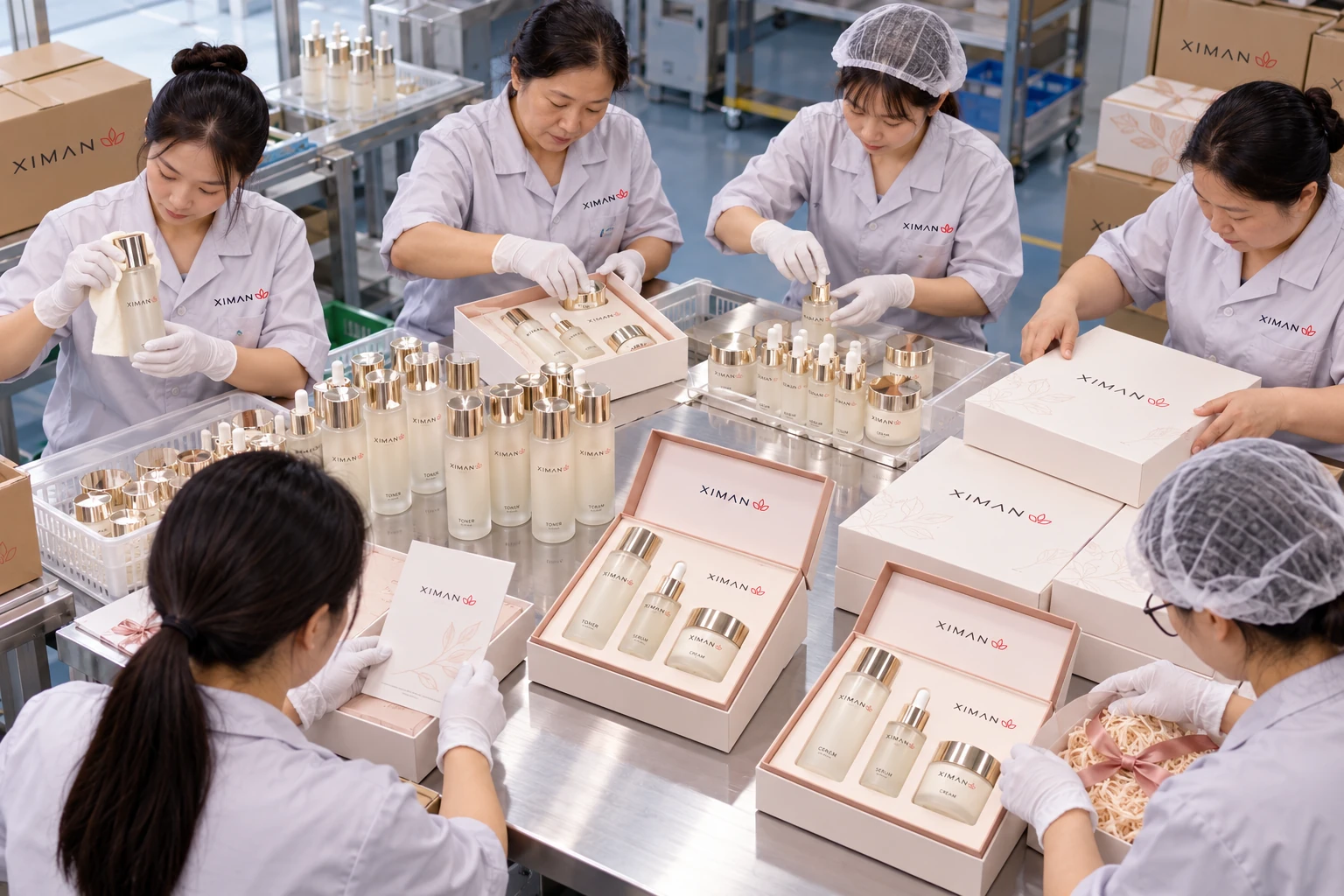
Cosmetics packaging material wastage covers components that become unusable through transport damage, printing defects, setup, filling, capping or quality rejection. Clarify how the allowance is calculated, who supplies extra materials and how unused stock is handled.
A first-time buyer may see a packaging-loss allowance in an OEM quotation without understanding it. Reviewing the basis helps you prepare suitable quantities and compare the cost.
What packaging wastage means
Bottles, closures, cartons and labels can be damaged, scratched, misprinted or consumed during equipment setup. These unusable components contribute to wastage. An allowance can be a legitimate part of material planning, but should be explained rather than accepted without a basis.
Where losses occur
Filling and capping equipment may require setup trials and parameter adjustments. Materials can also be damaged during internal handling or rejected at inspection. More complex components or decoration may create different loss risks.
How an allowance is calculated
Suppliers may express the extra-material allowance as a percentage, but the basis needs to be defined. Ask how the percentage translates into the actual purchase quantity and finished-product target. The appropriate allowance varies with the component, process and supplier data.
Why the agreement matters
Insufficient components can interrupt production and delay completion. Ask how much extra material is required, who provides it, who bears the cost and what happens to defective components. Record the answers before ordering packaging.
Investigate an unusually high allowance
A reasonable allowance supports production, but a high figure requires an explanation. Ask about the component design, historical data and process risks and compare equivalent assumptions with other suppliers.
We identify the packaging allowance separately in quotations and explain the calculation so that customers can plan component quantities before production.
Packaging assessment: manage quantities and responsibility
No single wastage percentage fits every component. Bottle design, material, decoration, equipment and order size affect the appropriate allowance. Ask for the project-specific basis.
Distinguish purchased component quantities from finished-product delivery quantities. For example, delivering 5,000 finished units may require more than 5,000 component sets. State who pays for the additional materials in the quotation or purchase order.
Unused branded components remain an asset to manage. Agree whether they are returned, stored for a reorder or handled under an agreed retention and disposal arrangement.
Common sources of packaging losses
| Stage | Possible cause | Control approach |
|---|---|---|
| Incoming components | Breakage, print defects or dimensions outside specification | Incoming checks and supplier replacement process |
| Line setup | Equipment settings or closure and pump fit | First-piece approval and setup checks |
| Production | Scratches, deformation or assembly problems | Process sampling and equipment maintenance |
| Quality selection | Appearance outside the agreed standard | Clear appearance criteria |
| Transport and storage | Crushing, contamination or moisture | Suitable protective packing and storage |
Frequently asked questions
Does the lowest allowance indicate the best factory? Not necessarily. An unrealistically low allowance may omit genuine risks. Examine data and component complexity.
Does the customer pay for lost components? That depends on the agreed commercial responsibilities. There is no single arrangement for every project.
How can losses be reduced? Improve incoming-component quality, confirm product and equipment compatibility, and use first-piece and in-process checks.
Project conclusion
Prepare extra components based on a justified, agreed allowance. Clarify the calculation, cost responsibility and replacement process before purchasing so that material planning is workable.
Discuss your project with XIMAN
Share the component type and order quantity with XIMAN. We can explain the proposed material allowance, calculation basis and responsibilities for the project.
Sources & review date
- XIMAN project preparation and sourcing guidance ↗ · Checked 2026-10-11
Sources and check dates are listed above; applicability depends on the destination market and product conditions.
Discuss your market and product
Share your destination market, product category, project stage and estimated quantity to plan the next step.