A startup needs more than the cheapest supplier. The first product project must keep fixed development costs, inventory risk and communication complexity under control. A suitable private label skincare manufacturer should let you test the market with a small number of SKUs while keeping a path open to custom formulas and packaging later.
Startups differ from established brands: budgets are limited, teams are small and sourcing experience may be limited. Applying a large brand’s purchasing criteria can make cooperation difficult. This guide explains how to select a private label manufacturer around a startup’s actual needs.
Define your requirements first
Before approaching manufacturers, clarify three things: the product, the intended customer and the budget. Different positioning requires different capabilities. A basic moisturizer and a targeted serum, for example, place different demands on a supplier. Clear requirements make screening and communication easier. Write them down as a practical checklist you can include in your first email.
Find a manufacturer that can accept a smaller first order
Many manufacturers set a minimum order quantity, or MOQ, which a startup may not reach. Ask directly what the minimum is and whether it can be reduced. Some suppliers may offer a smaller packaging format or another lower-volume arrangement. Share your expected first-order quantity so the supplier can assess feasibility. A smaller first commitment can reduce your exposure.
Check sampling flexibility
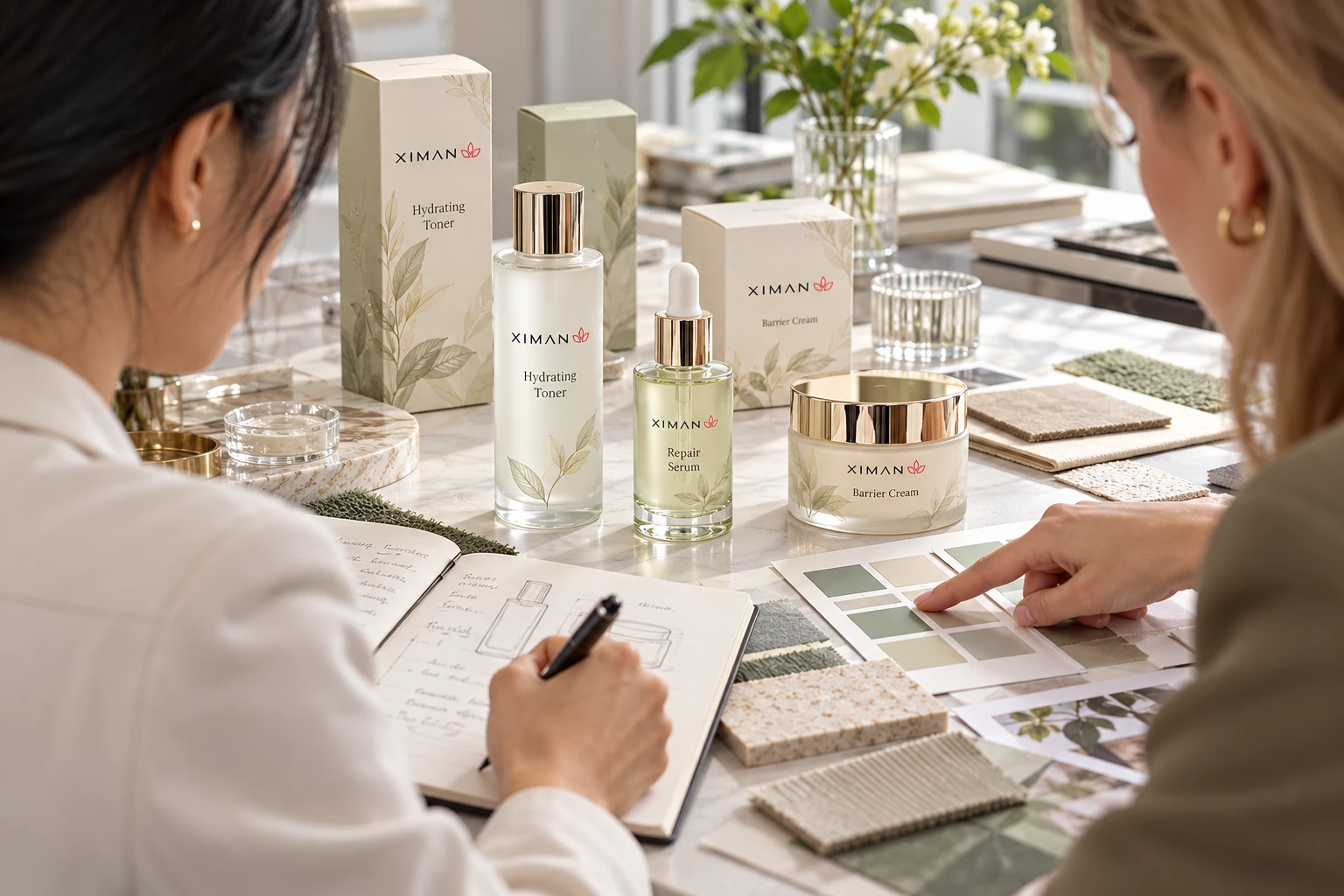
Develop samples before committing to a private label product. Agree the sampling fee and the number of included revisions in advance. Startups often need several formulation adjustments, so a clear process and willingness to discuss changes can save time. Describe the desired product characteristics as specifically as possible. If funds are limited, ask whether adapting an established formula could cost less than developing one from scratch.
Assess communication
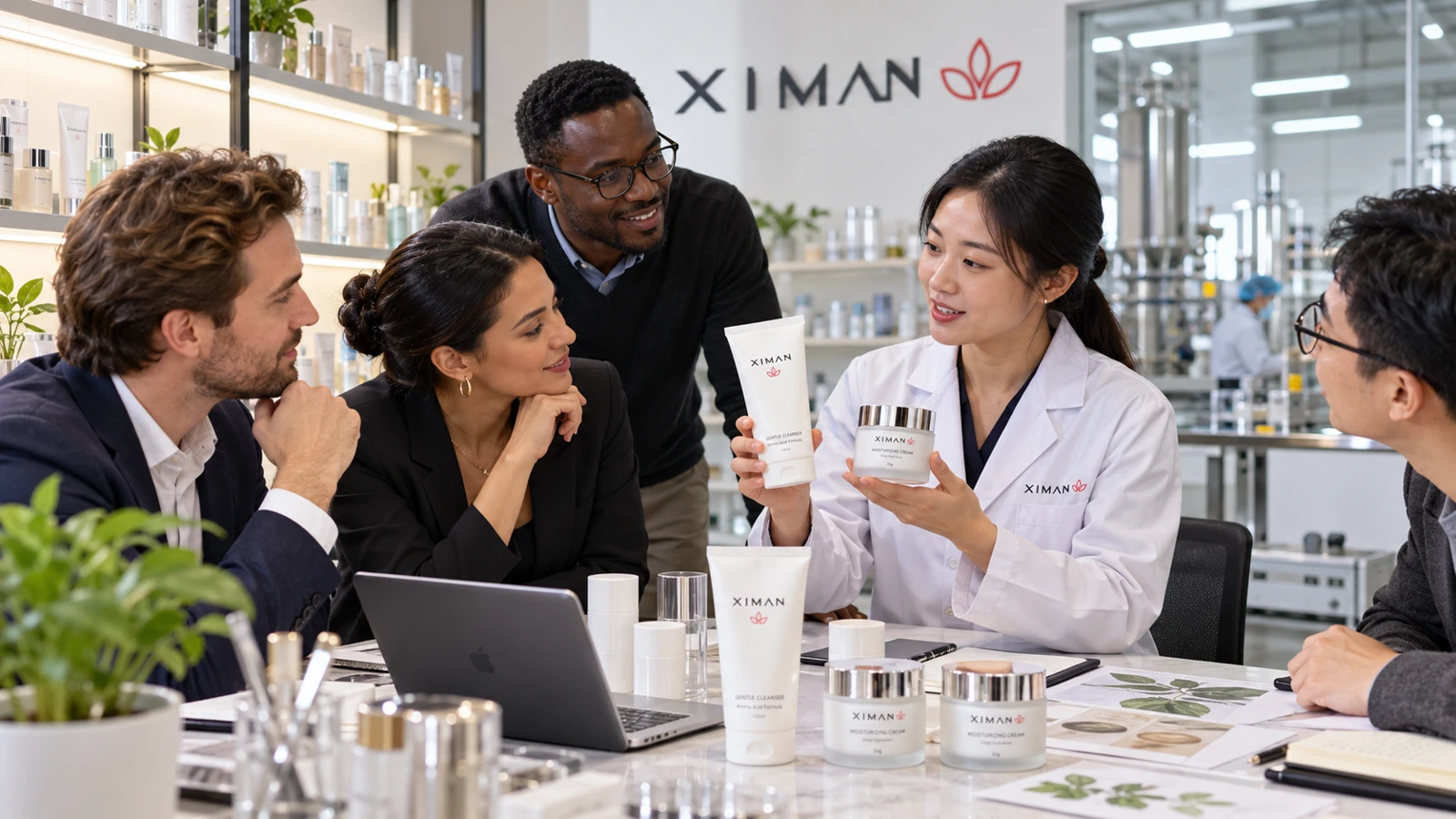
Formulation terminology, packaging materials and regulatory requirements may be unfamiliar. A supplier willing to explain these clearly can make the project easier to manage. Exchange emails or arrange video discussions before choosing. Look for plain explanations, timely responses and clear answers; these are particularly useful when working across countries.
Use a small order to test cooperation
Avoid committing immediately to a large first order. A smaller run lets you assess product quality and how the manufacturer handles the project before increasing volume. Record issues during the trial so that subsequent production can proceed with clearer expectations.
We have worked with a number of startup brands. A common difficulty is an unclear brief, including the intended skin type or product proposition. We help clarify these requirements before starting samples.
Project judgment: reduce risk in the first order
Define a minimum viable product range. In the first stage, build one or two core SKUs around a clear audience and need, rather than launching cleanser, toner, lotion, cream and masks together. Every additional SKU adds sampling, packaging, inventory and compliance documentation work.
Separate essential spending from upgrades that can wait. Do not cut safety, basic quality, necessary testing or compliance to save money. Bespoke molds, elaborate decoration, excessive SKUs and extensive fragrance or color customization can wait until the market has been tested.
Check whether the factory really suits a small brand. Ask which nonessential costs it would remove if the first-order budget is limited. A useful supplier should explain how to reduce complexity while retaining necessary quality.
Startup manufacturer decision checklist
| Question | A startup-friendly approach | A reason to investigate further |
|---|---|---|
| First-order SKUs | Test one or two core SKUs first | Recommends a broad range immediately |
| MOQ | Explains whether formula, packaging or filling sets the minimum | Gives a number without explaining it |
| Formula | Offers established-formula adjustments and custom development | Offers only one route |
| Packaging | Has standard packaging or options with limited mold investment | Requires a new mold before proceeding |
| Communication | A named project contact coordinates formulation, packaging and production | Sales only forwards messages and technical questions go unanswered |
Buyer FAQs
Must a startup choose a low-MOQ factory? A low MOQ matters, but so do a transparent explanation of the minimum, dependable reordering and the ability to scale after the first order.
Should the first product use a custom formula? Custom development can suit a proposition built around a distinctive formula. If the immediate aim is testing a sales channel and customer group, adjusting an established formula can be more efficient.
Which costs do startups commonly underestimate? Packaging, samples and revisions, compliance and logistics are often underestimated compared with the bulk product and processing cost.
Purchasing takeaway
Look for fit: a clear brief, feasible order quantity, flexible sampling and effective communication. Start with an inquiry email explaining the concept and budget. Specific responses that answer your questions provide a useful basis for deciding whether to proceed.
Next step: talk to XIMAN
For your first skincare brand project, share your product idea, budget range and expected first-order quantity with XIMAN. We can discuss formulation, MOQ, packaging and project timing to help identify an appropriate starting approach.
Sources & review date
- XIMAN project preparation and sourcing guidance ↗ · Checked 2026-10-11
Sources and check dates are listed above; applicability depends on the destination market and product conditions.
Discuss your market and product
Share your destination market, product category, project stage and estimated quantity to plan the next step.