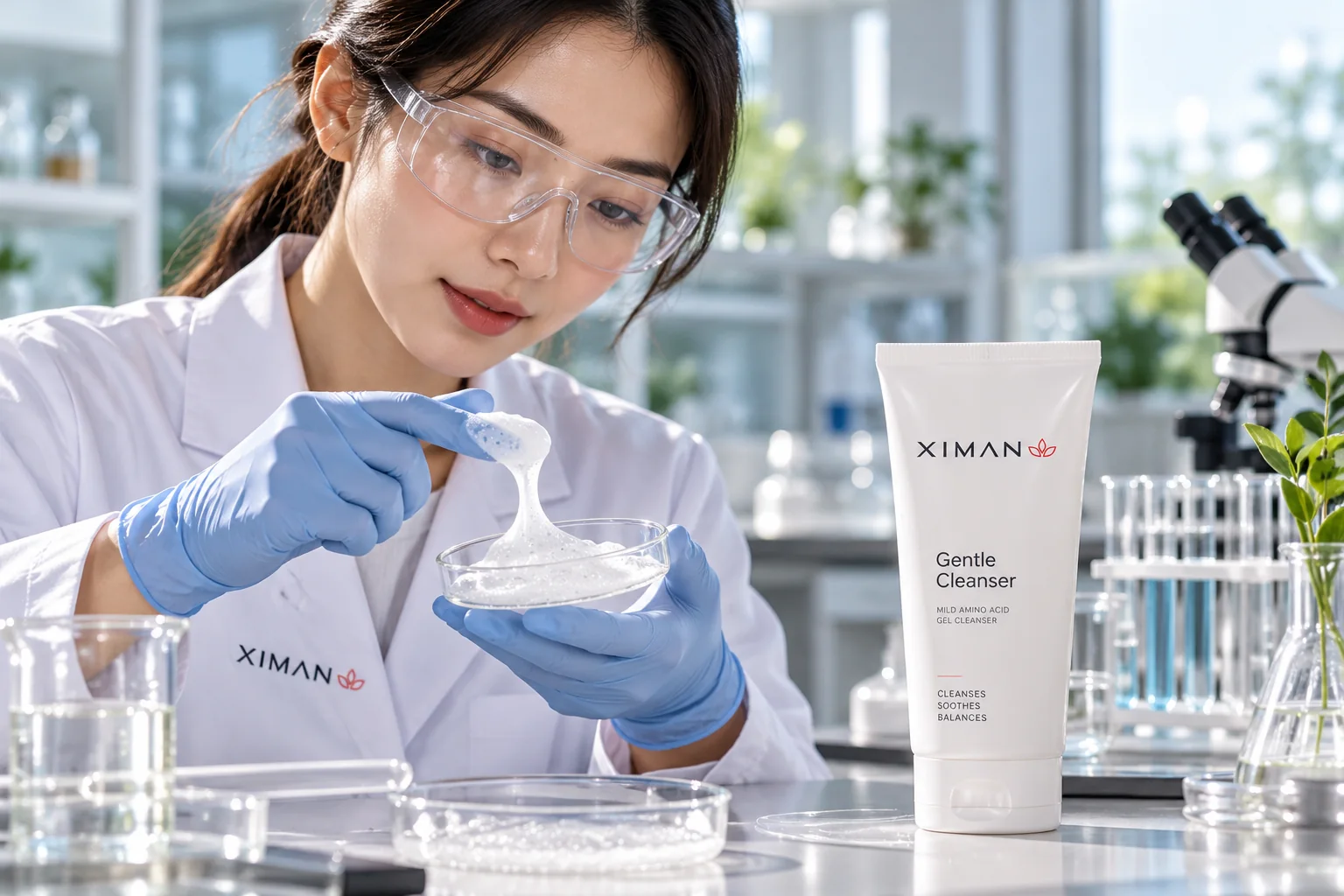
Develop the formula and emulsification process together
An emulsion needs a compatible ingredient system and a manufacturing process that produces the intended structure. A cream or lotion should be evaluated for physical stability, sensory behavior, product protection and performance in its chosen pack.
Oil-in-water emulsions often suit lightweight lotions; water-in-oil systems may serve different sensory and protective objectives. Neither architecture is automatically superior. Choose based on target skin feel, intended product function, formula constraints and testing—not a fashionable ingredient label.
Think in formulation systems
A formulator rarely chooses one ingredient in isolation. Changing an emollient to improve slip can affect emulsion stability. Increasing humectants may alter tack and perceived moisturization. A fragrance may influence sensory perception and require additional compatibility review. Even container geometry can influence how consumers experience the same cream.
The first development brief should therefore describe the desired user experience and non-negotiables: target market, fragrance policy, texture, ingredient restrictions, container, fill size and indicative cost envelope.
Processing creates part of the product
For emulsions, the sequence of heating, phase combining, homogenization and cooling can influence the structure seen in the final jar. Different equipment delivers different mixing patterns. Scale-up should examine in-process checkpoints such as appearance, pH, viscosity and uniformity, while recognizing that suitable methods depend on the specific formula.
| Formulation decision | Typical trade-off to evaluate |
|---|---|
| Higher oil phase | Richer feel versus weight and shine |
| More structuring agents | Body and stability versus drag or waxiness |
| Lightweight emollients | Quick spread versus desired cushion |
| Fragrance inclusion | Sensory signature versus sensitivity and regulatory review |
| Jar versus pump | Application ritual versus exposure and dispensing behavior |
Evaluate more than appearance
A product can look uniform immediately after manufacture and still change during storage. Review appropriate stability observations, microbiological protection where relevant, and compatibility with the actual pack. Request meaningful acceptance criteria and distinguish internal prototype screening from final product evidence.
If a brand plans to advertise measurable performance—such as specific hydration improvement—that claim requires suitable substantiation. Formula architecture can support a product concept, but it cannot establish a clinical claim by itself.
Investigate separation without changing several variables at once
Creaming, coalescence and a visible oil layer do not describe the same mechanism. Where suitable, microscopy and consistent physical measurements can help a formulator distinguish droplet movement from loss of droplet integrity. The interpretation belongs to the technical investigation; a photograph of a smooth surface cannot settle it.
Compare the failed sample with the approved reference and review the oil phase, emulsifier system, electrolytes, thickener hydration and cooling sequence. Change one justified variable at a time during development and preserve each revision's identity. If a fragrance variant destabilizes the base, do not assume all variants share the base formula's successful results. The manufacturing instruction should capture the process that produced the accepted structure, including relevant temperature and mixing checkpoints. This creates a defensible link between a stable prototype and repeatable commercial production.
Frequently asked questions
Does a higher oil percentage mean a better moisturizer? Not necessarily. Consumer comfort and claimed performance depend on the whole formula, use conditions and supporting evidence.
Can a lotion simply be thickened into a face cream? Sometimes texture can be adjusted, but stability, packaging, application dose and sensory requirements may need broader reformulation.
Does increasing emulsifier always fix an unstable cream? No. The issue may involve ingredient compatibility, processing or the overall structure. Additional emulsifier can also alter skin feel. A targeted investigation is preferable to repeatedly increasing one component without a diagnosis.
Next step: Discuss target texture, climate, packaging and substantiation priorities with XIMAN before committing to an emulsion prototype.
Sources & review date
- European Commission scientific and technical assessment ↗ · Checked 2026-10-14
Sources and check dates are listed above; applicability depends on the destination market and product conditions.
Discuss your market and product
Share your destination market, product category, project stage and estimated quantity to plan the next step.