Evaluate cleansing and after feel under defined use
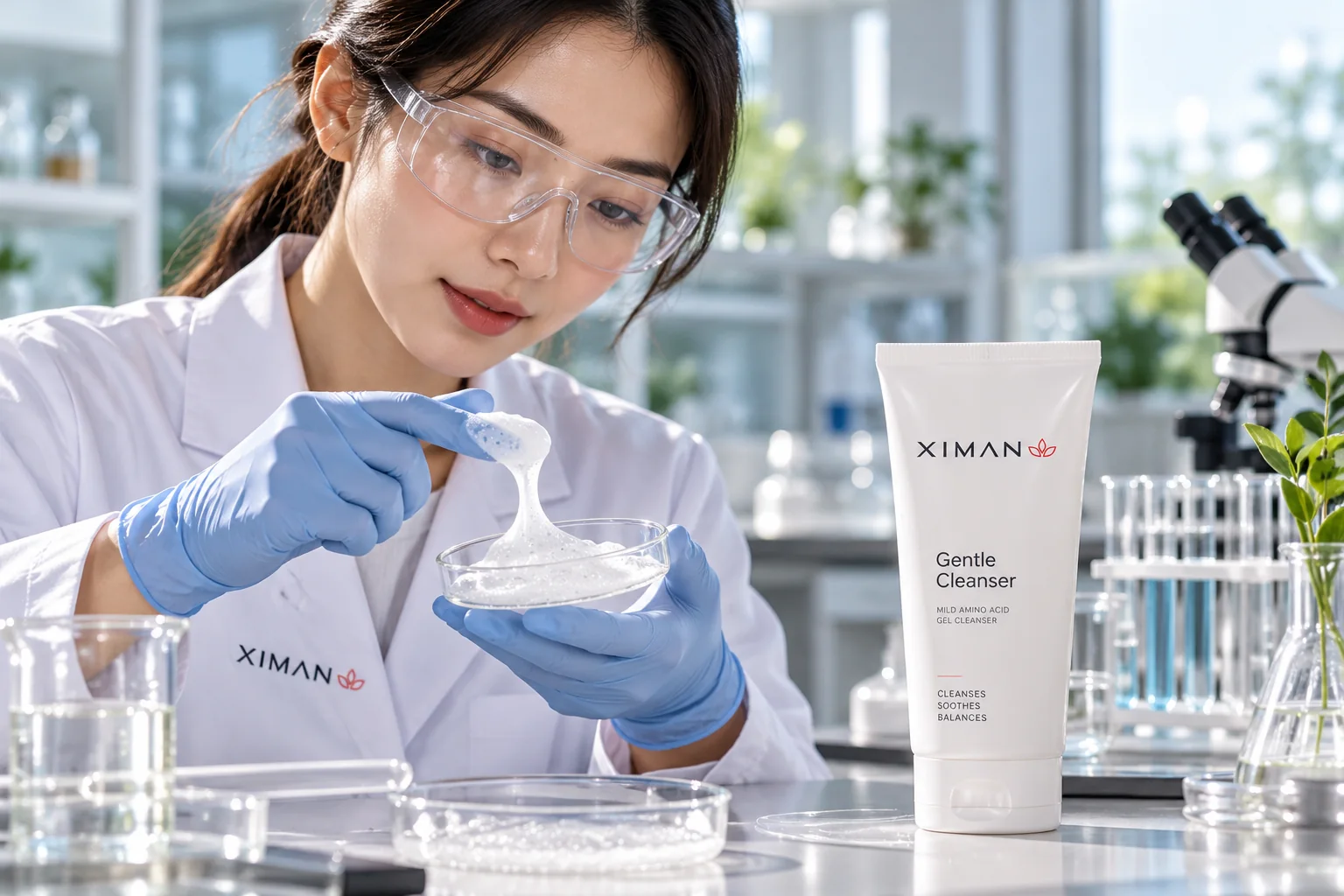
A facial cleanser manufacturing brief should define the cleansing task, foam, rinse behavior, after-feel and delivery system. Discuss a gel, cream wash or foaming liquid with XIMAN against a reference routine; a headline ingredient alone cannot establish finished-product mildness or suitability.
For brands, the first choice is the experience to deliver: a low-foam gel, a soft foaming cleanser, a creamy wash or another format. Only then should the manufacturer select a suitable formula architecture and package.
Define the problem the cleanser must solve
Is the target customer removing everyday surface impurities, looking for a gentle morning cleanse, or using the product after makeup removal? State the intended routine rather than demanding a long list of ingredient claims. A product claiming treatment of acne or another disease can enter a different regulatory category in the United States, depending on its intended use and claims.
| Briefing dimension | Useful question |
|---|---|
| Cleansing experience | What type of residue should the product remove? |
| Foam | No foam, low foam or rich foam—and why? |
| After-feel | Soft, refreshed, non-tight or conditioning? |
| Fragrance | Fragranced, low-odor or fragrance-free? |
| Packaging | Pump, tube, foamer or refill? |
| Evidence | What will support “gentle” or other performance claims? |
Evaluate more than the formula sheet
Compare identified samples using the same dose, washing time, water conditions and rinse method. Record dispensing, foam, cleansing observations and residual feel against a relevant reference. Set acceptance criteria before the next revision. Sensory preference does not replace a suitable safety, microbiological or claim-substantiation assessment.
Trial the formula with the intended pump, foamer or tube over repeated use. Check dose, priming, leakage and compatibility under relevant conditions. Quote the formula batch, filling and each component minimum separately: a foamer or custom decoration may set MOQ even when the bulk batch can be smaller.
Avoid ingredient list shortcuts
A marketing narrative around a single “gentle surfactant” does not establish that the finished product is mild for every user. Concentrations, combinations, formulation pH, usage directions and the overall product matter. Likewise, calling a cleanser “pH-balanced” without explaining what was measured adds little useful information.
Compare surfactant proposals on an active matter basis
A formula containing 10% of a surfactant solution with 30% active matter contains 3% active matter from that material on a weight basis. The example is arithmetic, not a recommended cleanser concentration. Comparing the addition rates of two supplier solutions without their active content can give a misleading impression of cleansing strength.
The full surfactant blend, pH, conditioning ingredients, dose and rinse conditions still matter. Use a common test routine to evaluate cleansing, foam and after-feel, including representative water conditions when relevant to the destination market. A foamer also needs a functional trial with the complete formula: thicker is not necessarily better for that delivery system. If consumers report tightness, establish the use conditions and severity before assuming the answer is simply less foam or a different headline surfactant.
Frequently asked questions
Is sulfate-free automatically gentler? No. The safety and sensory behavior of the finished formula depend on its full composition and use conditions.
Does a facial cleanser need preservative testing? A water-containing cleanser generally warrants an appropriate microbiological protection assessment based on formulation risk.
Does pH-balanced mean the cleanser has proven mildness? No. pH is one characteristic measured under defined conditions. The claim should identify its meaning, and finished-product mildness or skin-compatibility statements need evidence beyond that single measurement.
Send XIMAN the cleansing use, reference sample, foam and rinse goals, fragrance preference, pack and fill size, estimated units per SKU and destination market. Agree prototype feedback, package trials, necessary evidence and written release criteria before scheduling. See the sampling and quotation guides for the information to prepare.
Sources & review date
- FDA classification of soaps and lotions ↗ · Checked 2026-10-14
- ISO 11930 standard overview ↗ · Checked 2026-10-14
Sources and check dates are listed above; applicability depends on the destination market and product conditions.
Discuss your market and product
Share your destination market, product category, project stage and estimated quantity to plan the next step.