Start with the product that is hardest to remove
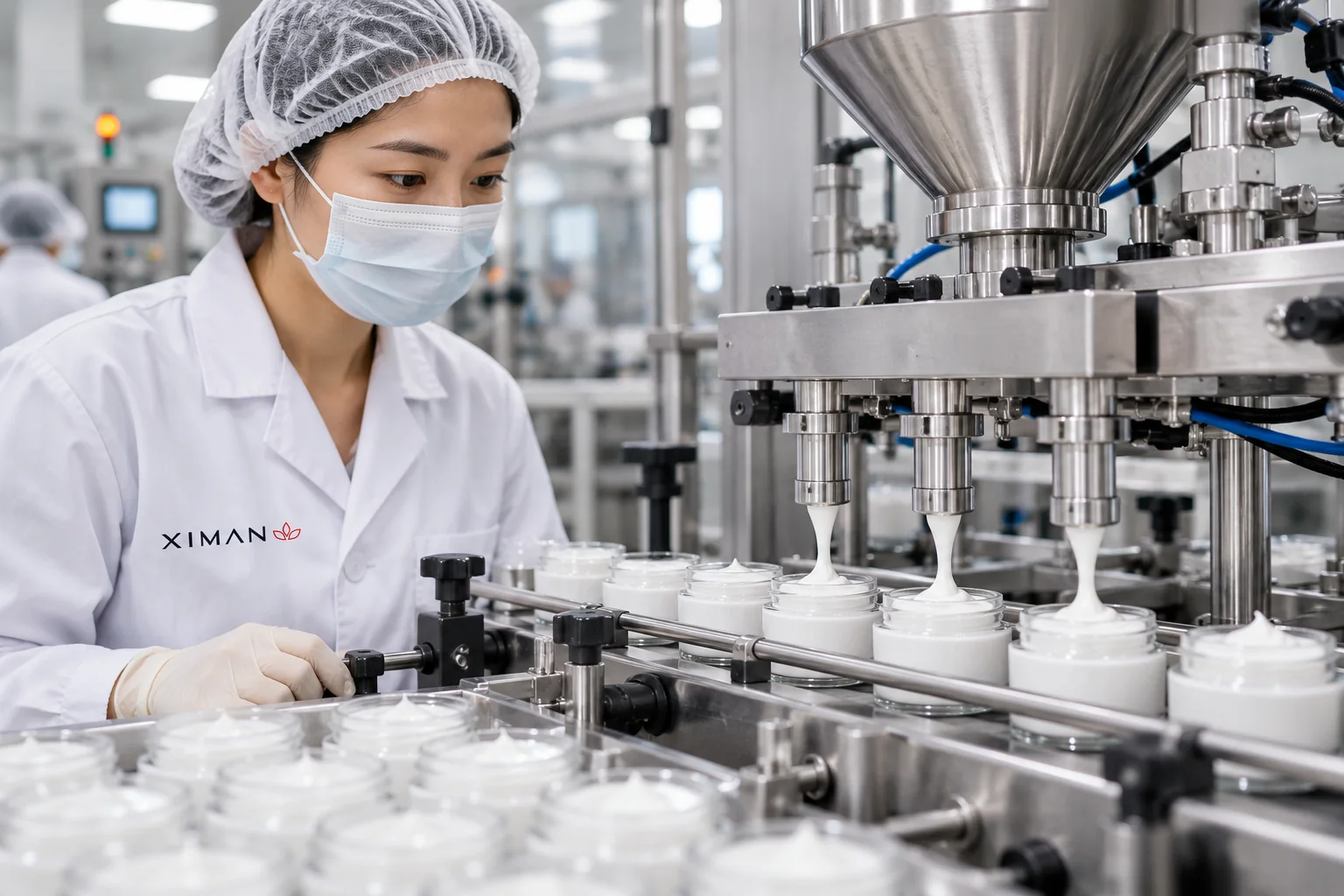
A clear serum, fragranced body lotion and pigmented balm can leave different residues on the same equipment. Assess cleaning against the materials and equipment used in your project. A supplier's statement that every vessel is washed after production is useful only when the cleaning method and acceptance decision are defined.
Potential carryover includes the previous formula, fragrance, colorant and the cleaning or sanitizing materials themselves. Equipment can also introduce contaminants through damaged seals, retained material or unsuitable handling after cleaning. For a fragrance-free product, even a small detectable odor from the prior campaign can undermine the concept without necessarily producing a visible residue.
FDA's cosmetics inspection checklist addresses clean contact surfaces and protection of cleaned equipment. ISO 22716 provides the broader cosmetics production and control context. Neither public overview proves that a particular manufacturer's cleaning method works for your formula. [1] [2]
Distinguish the cleaning instruction from its verification
The written procedure should describe the equipment scope, dismantling where needed, cleaning sequence, relevant conditions, rinsing, inspection and responsibility for release. Verification then asks whether the procedure achieved the justified result. A signed form showing that somebody performed the steps is not the same as evidence that difficult residue was removed.
Ask the manufacturer which surfaces are likely to retain product: pump housings, valve seats, gaskets, filling nozzles and transfer-line connections deserve attention. A vessel wall that is easy to inspect should not be the only surface represented in a verification exercise. The technical team should explain how its chosen checks address less accessible locations.
Select sampling that can answer the residue question
| Approach | What the buyer needs clarified |
|---|---|
| Visual examination | Lighting, accessible surfaces and the limits of what can be seen |
| Swab sampling | Defined area, target location and suitability for the residue |
| Rinse sampling | Whether the rinse represents the surfaces and material of concern |
| Chemical examination | Method sensitivity and relevance to product or cleaning-agent residue |
| Microbiological checks | Sampling timing, recovery and the condition being assessed |
Each approach has limitations. A clear rinse does not demonstrate absence of every residue, and a swab result from one smooth surface cannot represent an entire filling line without justification. Ask how the sampling method's recovery and capability are understood for the material being measured. There is no useful universal residue number that applies to every formula and piece of equipment.
Cleaning-agent removal also needs attention. A procedure that removes the previous cream but leaves unwanted cleaning material has not achieved the intended outcome. The acceptance rationale should address both, with qualified personnel determining which measurements are appropriate.
Control the interval before and after cleaning
Two time periods can affect the assessment: how long dirty equipment waits before cleaning and how long cleaned equipment waits before reuse. Dried residue may be harder to remove. Clean equipment left open or stored poorly can become contaminated again. Establish the conditions under which those periods were assessed and what triggers recleaning or further examination.
For example, an overnight interruption should be evaluated against the procedure's actual assumptions. An operator cannot simply label equipment clean because the previous shift completed washing. Storage condition, covers, identification and any restart checks need to remain consistent with the approved practice.
These intervals are operational controls for the specific process, not standard durations to copy from another factory. Ask whether changes in the production schedule are reviewed when they extend either waiting period.
Make line clearance a separate changeover decision
After cleaning, confirm that materials and labels from the previous job have been removed and that the next product's components are correctly identified. A clean line can still fill the wrong formula into the wrong bottle. Check how unused labels, partial component boxes and retained samples are reconciled during the changeover.
The release record should make it possible to establish which line was ready, for which product and when. If the next job changes to a different fragrance or market artwork, connect those identities to the production record. A joint review of cleaning and line clearance can reveal gaps that photographs of polished stainless steel cannot show.
Frequently asked questions
Does sanitizing equipment remove the previous formula? Cleaning and sanitizing have different purposes. The procedure must address product and cleaning residues as well as appropriate microbial controls; one step should not be assumed to perform every function.
Can the brand request a redacted cleaning record? Yes, as a commercial information request. Agree the scope with the supplier. The record should retain enough product, equipment and method context to make the evidence meaningful.
Must every cosmetic line use the same cleaning test? No. The formula, residue, equipment and product risks determine suitable checks. A justified program is more informative than imposing one test regardless of what the line manufactures.
Project discussion: Give XIMAN your fragrance, pigment and ingredient exclusions so the proposed cleaning and changeover review addresses the actual product.
Sources & review date
- [1] FDA cosmetic GMP guidelines and inspection checklist ↗ · Checked 2026-10-14
- [2] ISO 22716 Cosmetics good manufacturing practices overview ↗ · Checked 2026-10-14
- [3] FDA Microbiological Safety and Cosmetics ↗ · Checked 2026-10-14
Sources and check dates are listed above; applicability depends on the destination market and product conditions.
Discuss your market and product
Share your destination market, product category, project stage and estimated quantity to plan the next step.