Define the serum customer and primary benefit
A productive serum brief identifies the target customer, principal cosmetic benefit, desired texture, market, pack and commercial constraints. These decisions let manufacturers quote comparable development work and propose a coherent formula.
Decide who will use the serum, when it will be applied, which products it should layer with, and which market will receive it first. The same ingredient story can require different claim language and documentation depending on the destination market.
The six elements of a useful serum brief
Consumer and positioning. Define age or lifestyle context where relevant, skin concerns expressed in cosmetic rather than therapeutic terms, price tier and brand personality. Avoid declaring that a product will cure acne, eczema or other conditions when planning a cosmetic.
Texture and fragrance. Choose a watery serum, gel, fluid emulsion or oil and describe slip, tack after drying, residue and layering. Compare an identified reference sample using the same dose and routine. Record observations at agreed intervals; a preference panel is not proof of efficacy or safety.
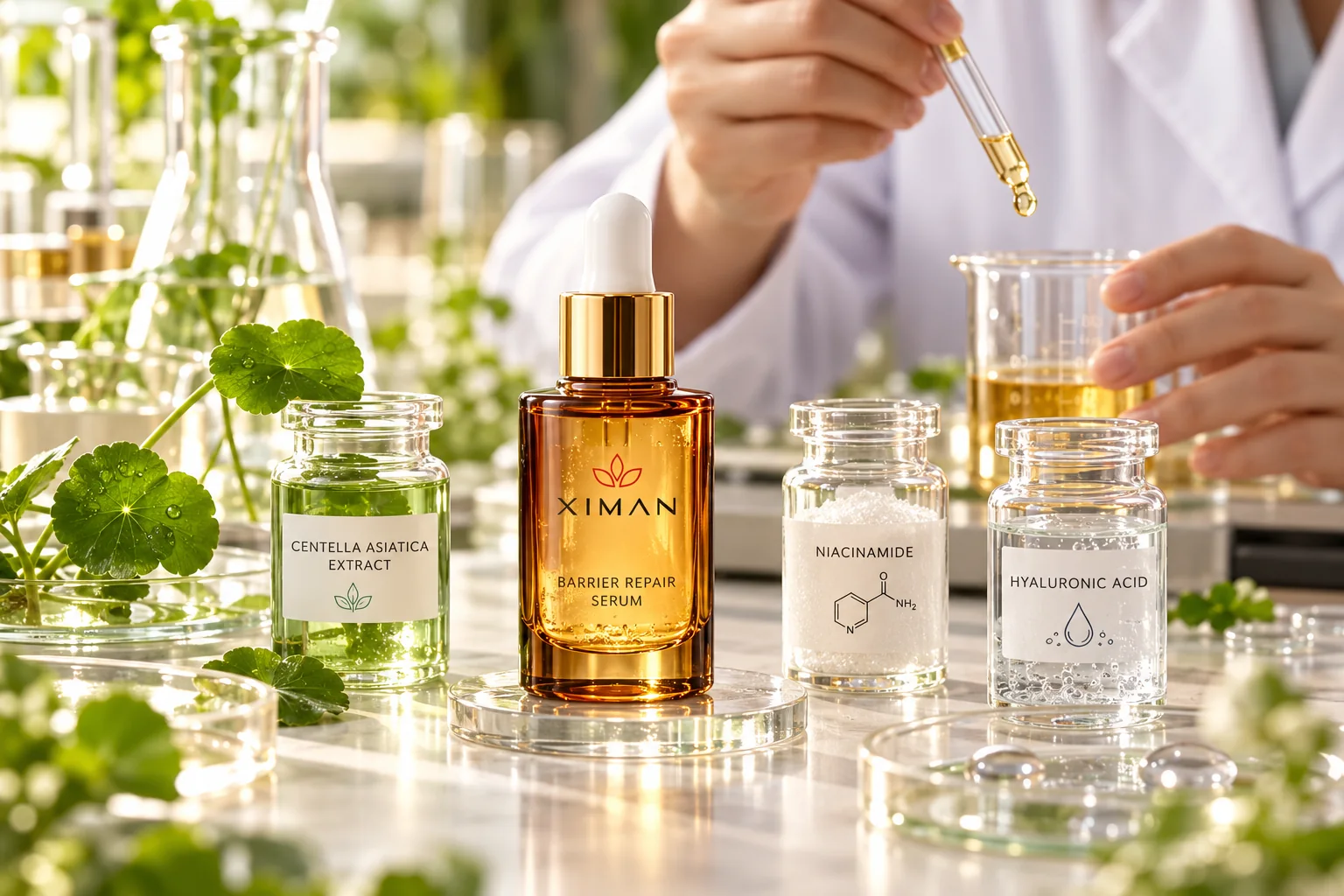
Ingredient principles. Distinguish mandatory ingredients from optional preferences. Request INCI-level review of restrictions, compatibility and substantiation. A percentage claim must identify what is being measured: supplied raw material, active content or finished-formula concentration.
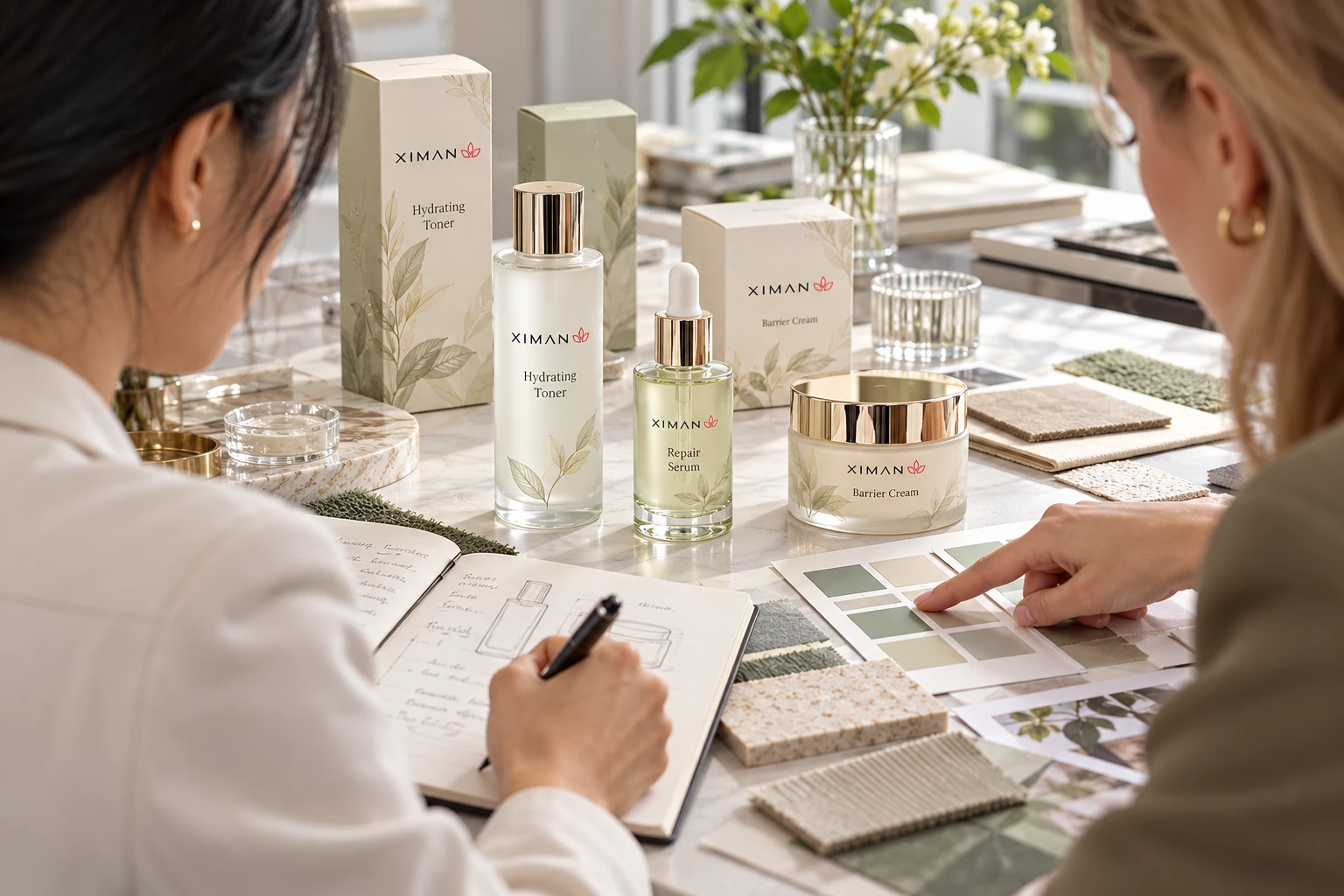
Packaging. Specify fill volume, dose and dropper or pump design. Trial the actual formula in the proposed component for repeat dispensing, leakage, material compatibility and relevant storage conditions. A visually similar stock bottle is not proof that the decorated production pack is suitable.
Evidence. Decide which claims require ingredient data, finished-product instrumental tests, consumer-use studies or other suitable support. An ingredient supplier's brochure is not automatic evidence for a finished serum's claimed result.
Commercial boundaries. Give an estimated first order per SKU, target cost scope, destination market and desired launch window. Ask which formula-batch, component and decoration minimums drive MOQ. Confirm sample revisions, testing responsibilities and the conditions for scheduling; do not infer a fixed lead time from a concept brief.
A simple approval sequence
| Stage | Brand decision |
|---|---|
| Concept | Is the target user and benefit clear? |
| Prototype | Does the sensory profile fit the brief? |
| Technical review | Are ingredient, safety and test requirements understood? |
| Packaging trial | Does the formula dispense and remain compatible? |
| Final sign-off | Is the approved master sample tied to a version and specifications? |
Prevent the common ingredient led failure
A serum marketed with many trendy actives can become harder to stabilize, substantiate and explain. Ask the manufacturer to identify which ingredients genuinely contribute to the concept and which primarily add cost or label complexity. A coherent formulation is more valuable than a crowded headline.
Put formula access and ownership in the development agreement
Before paying for custom development, establish what the fee buys: sample revisions, testing, access to a defined formula, exclusivity, ownership or permission to manufacture. These are different commercial rights. A confidential stock formula sold under several labels is not automatically an exclusive custom formula.
Agree how necessary composition data will reach a safety assessor or regulatory adviser under confidentiality terms. Also define what happens if the brand changes manufacturer: which records can be transferred, which materials remain proprietary, and whether a replacement supplier would need redevelopment. Compare quotations using the same scope of formula work, packaging, testing and included services. A low initial development fee may be reasonable, but it cannot be assessed without knowing which later costs and rights sit outside it.
Frequently asked questions
Can a private label serum still feel distinctive? Yes. Packaging, sensory refinements and a well-chosen consumer focus can help differentiate a product, subject to agreements and testing.
How many prototypes should a brand expect? That varies with complexity and revision scope. Agree on feedback criteria and the revision process rather than relying on a universal number.
Does paying a sample-development fee make the formula mine? Not by itself. Ownership, licensing, exclusivity and transfer rights depend on the agreement. Ask for those terms in writing before commissioning work rather than inferring them from the payment description.
Send XIMAN the product role, target texture, ingredient priorities, pack and fill size, quantity range and destination market. Identify who approves the sample, artwork and evidence. Compare serum manufacturing options with the sampling guide before committing to component orders.
Sources & review date
- FDA cosmetics and drug claims ↗ · Checked 2026-10-14
- EU cosmetic claims criteria ↗ · Checked 2026-10-14
Sources and check dates are listed above; applicability depends on the destination market and product conditions.
Discuss your market and product
Share your destination market, product category, project stage and estimated quantity to plan the next step.