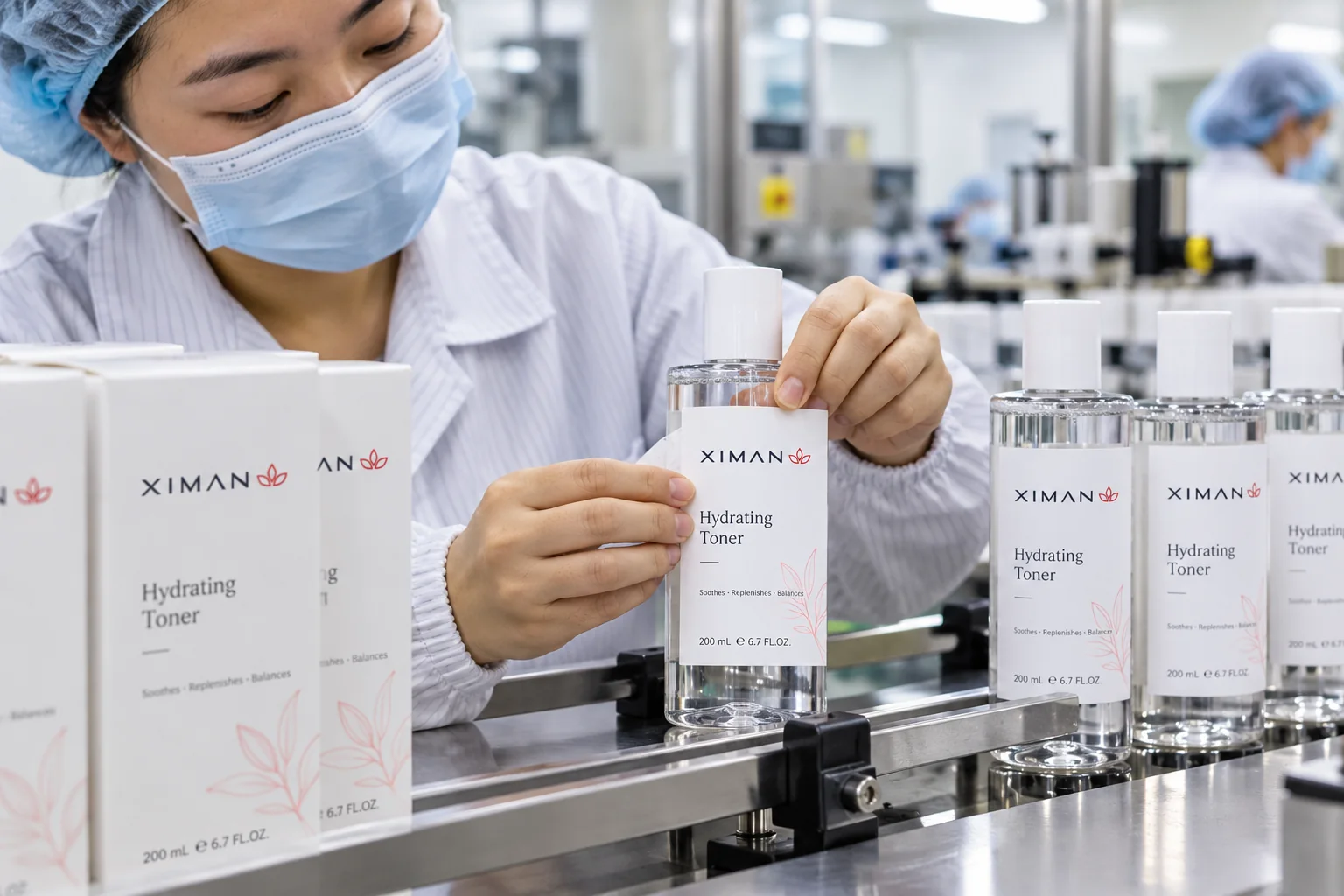
Treat the label and container as one system
A cosmetic label specification should identify the face material, adhesive, print, coating or laminate and actual container surface. Bottle resin, surface texture, decoration and cleaning history can influence the finished result. An adhesive described as permanent is not proof of acceptable performance on every cosmetic pack.
Define where the label is applied and the conditions after application. A flat test panel can support a material comparison without representing a curved bottle, seam or tight radius. The approved pack needs its own relevant evaluation.
Record the label version and application process. Changes in material, supplier or application settings can affect appearance and durability even when the artwork remains identical. Keep an approved physical reference where practical.
Distinguish a laboratory method from end use performance
ASTM D3330/D3330M addresses peel adhesion of pressure-sensitive tape. Its public scope describes the limits of interpreting results, including differences among tapes and the lack of a necessary direct relationship to functional requirements. It should not be presented as a complete qualification of a cosmetic label in consumer use. [1]
If a laboratory peel measurement is proposed, ask which method applies to the actual material and what the result will support. Different substrates, dwell times, angles or procedures can produce results that are not directly comparable. Qualified evaluators should select the appropriate method rather than choosing a standard number for appearance.
Functional observations remain necessary where relevant: edge lift, wrinkling, movement, abrasion and print deterioration. A strong peel result does not independently prove that the batch code remains readable after handling.
Define realistic environmental exposures
Choose exposures based on the intended product and distribution. A body wash bottle used in a shower presents different moisture conditions from an oil serum handled with oily fingers. Cold storage followed by a warmer humid environment may raise different questions from dry elevated-temperature storage.
Test product contact deliberately where foreseeable. Apply a consistent quantity and location, use a defined duration and record observations. Random splashes followed by subjective inspection make repeat comparisons difficult.
| Exposure or use | Observation to document |
|---|---|
| Moisture and humidity | Edge lift, wrinkles and movement |
| Product residue | Staining, print change and adhesion |
| Routine handling | Abrasion and readability |
| Curved application area | Stress at edges and seams |
| Storage transition | Condensation and subsequent appearance |
These are development questions, not universal pass limits. Set criteria suitable for the pack before testing rather than deciding afterward that a preferred sample is acceptable.
Assess batch codes separately from decoration
The code may be printed on the label, bottle, carton or another location using a separate process. Specify where the finished unit's identifying code appears and how it will be checked. A readable carton code does not necessarily solve identification when the consumer discards the carton.
Observe the actual code process on commercial materials. The test should address relevant rubbing, moisture or product exposure, as appropriate. Character size, contrast, placement and code format affect practical readability as well as durability.
If a barcode or machine-readable symbol is important to receiving or distribution, obtain suitable verification for its purpose. A single successful phone scan is a usability observation, not a substitute for a specified verification method.
Connect decoration acceptance to production control
Agree incoming label checks, application controls and finished-pack observations. Record material lot and artwork version so a problem can be traced. Cosmetic manufacturing guidance includes controls intended to prevent packaging and labeling errors; a durable label still needs the correct approved content. [2]
Check the timing of label application in the commercial process. Surface contamination or incomplete preparation may explain a failure that did not appear in a carefully prepared development sample. Investigate process conditions before assigning every defect to the adhesive supplier.
Approval should connect the actual label and container, application process, exposure results, code readability and artwork identity. Relevant formula or pack changes should trigger review of contact and durability questions, using tests appropriate to the system. [3]
Frequently asked questions
Does permanent adhesive mean a label can never lift? No. The result depends on the material, substrate, application and exposure. Assess the actual cosmetic pack.
Can a tape peel standard prove label durability in a shower? Not alone. Understand the method's scope and add relevant end-use assessment for the intended pack.
Should batch-code readability be checked separately? Yes. Its location and printing process may differ from the label decoration, and practical identification needs its own suitable checks.
Project discussion: Bring XIMAN the bottle, label materials and intended use conditions so adhesion, decoration and code readability can be evaluated as a complete pack.
Sources & review date
- [1] ASTM D3330/D3330M pressure-sensitive tape peel adhesion public scope ↗ · Checked 2026-10-14
- [2] FDA cosmetic GMP guidelines and inspection checklist ↗ · Checked 2026-10-14
- [3] FDA Product Testing of Cosmetics ↗ · Checked 2026-10-14
Sources and check dates are listed above; applicability depends on the destination market and product conditions.
Discuss your market and product
Share your destination market, product category, project stage and estimated quantity to plan the next step.