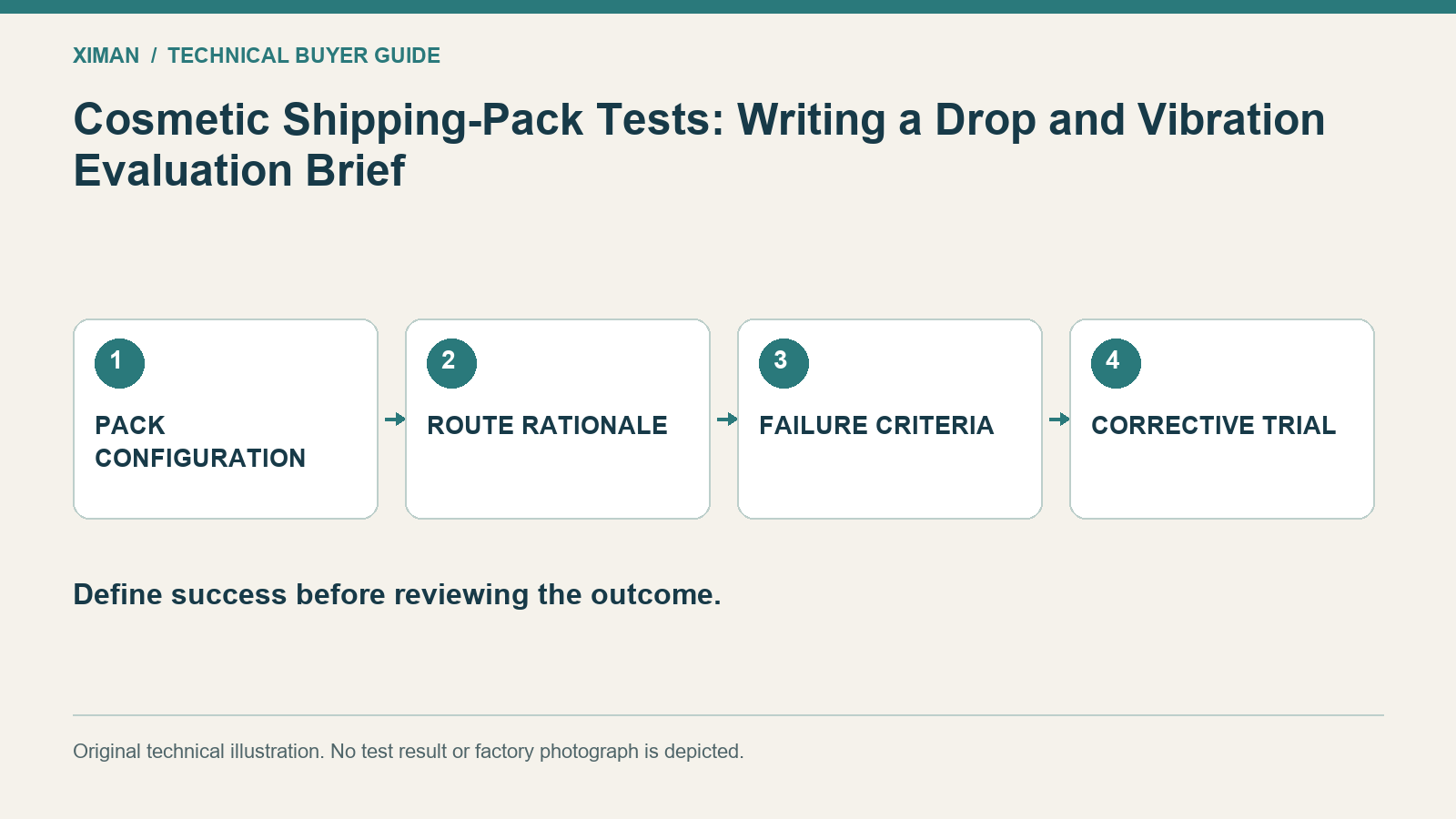
Shipping-pack evaluation should start with the proposed distribution route and the actual packed configuration. A test result is useful only when the brand can identify what was tested, under which procedure and what failure would prevent approval.
Define the shipping configuration
Record the primary container, closure, secondary packaging, dividers, carton, pack count and relevant pallet arrangement. Link the pack to the formula and fill specification used in the test. Changes in these details can change the scope of the evidence. Do not apply a result from one bottle-and-carton combination to a visually similar configuration without review.
Ask for an appropriate test plan
Describe the intended handling and distribution conditions to the packaging specialist or testing provider. Ask that party to select and justify the relevant methods and acceptance criteria. This article does not prescribe universal drop heights or vibration profiles. Retain the test procedure reference, sample identity, conditioning and observations so the result can be interpreted and reproduced within its stated scope.
Separate transport damage from product stability
Inspect for the agreed damage, leakage, closure and presentation outcomes, and document the disposition of failures. A transport test does not establish the chemical, physical or microbiological stability of the formula. Coordinate those programmes without treating them as interchangeable. Before placing a commercial order, confirm the configuration-control process and who authorises a component or pack-out change.
Write the failure criteria before opening the test report
Distinguish presentation damage, closure movement, leakage and other relevant outcomes in the evaluation brief. Ask the testing provider to state how they will be observed and what configuration the method covers. A passed result without a clear acceptance basis is difficult to apply to a commercial pack or a later component change.
After a failure, preserve the affected configuration and evidence before selecting a correction. Changing a divider, closure or carton can solve one problem while creating a different configuration that needs review. Keep transport handling and formula stability as separate conclusions. The transport result should not be used as a promise that every shipment or storage condition has been reproduced.
A purchasing and review record
| Decision point | Record to request | Action before approval |
|---|---|---|
| Configuration | Complete pack and formula identity | No silent configuration changes |
| Method | Route rationale and procedure reference | Have the specialist set conditions |
| Decision | Failure criteria and corrective action | Keep transport and stability conclusions separate |
Frequently asked questions
Does passing a shipment-pack test prove that every delivery will arrive undamaged?
No. It supports a decision for the defined test configuration and conditions. Distribution still involves variability, so preserve the test scope, handling instructions and investigation process for actual incidents.
Can a corrected carton be approved without repeating any evaluation?
Ask the packaging specialist to assess the change and establish the necessary verification. Document why previous evidence remains applicable or what additional work is required; do not assume the correction is neutral to the pack system.
Define the next project decision
Carry the tested pack configuration into the export shipping handover so a passed configuration is not silently replaced before dispatch.
Define the intended cosmetic format, destination and outstanding decision in a shipping handover brief. Discuss that scope with XIMAN and request confirmation of the information, development work and assessment responsibilities appropriate to the project. A concept diagram or supplier example does not document an actual XIMAN factory trial.
Sources & review date
- ISO/TR 18811 public abstract ↗ · Checked 2026-10-28
- ISTA: selecting and using transport test procedures ↗ · Checked 2026-10-28
- ISTA: test configuration, criteria and documentation ↗ · Checked 2026-10-28
Sources and check dates are listed above; applicability depends on the destination market and product conditions.
Discuss your market and product
Share your destination market, product category, project stage and estimated quantity to plan the next step.