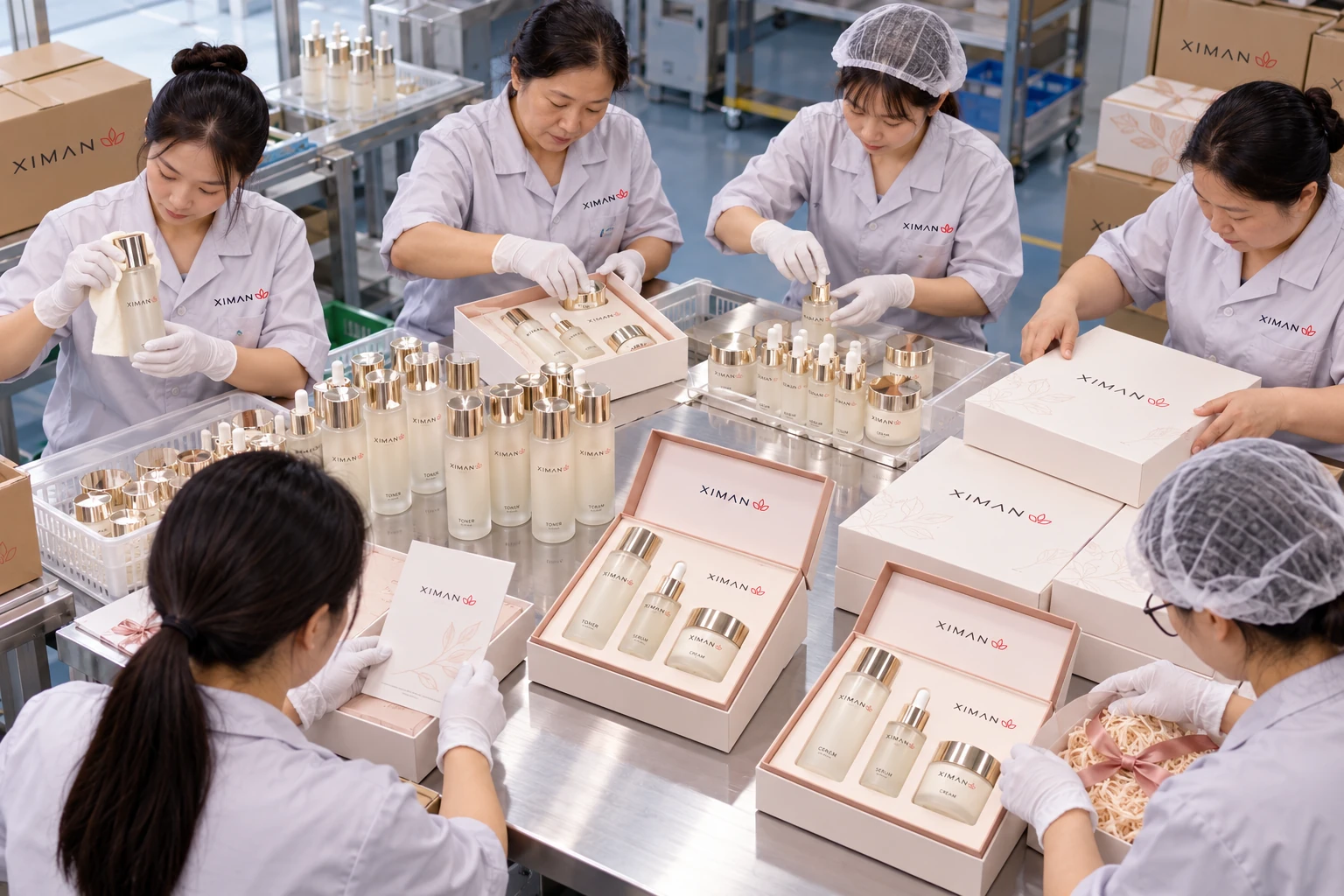
Compare component minimums and total launch commitment
A finished cosmetic pack can combine bottle, closure, decoration, carton and insert suppliers with different minimums. Request a component breakdown and show the cash, inventory and ownership implications for the first launch and repeat orders.
A new brand should therefore request a component-level quote, not only one all-inclusive unit price. This helps distinguish a genuine low-MOQ private label option from a project that becomes uneconomical when custom decoration is added.
Break the pack into its bill of materials
| Component | Questions to ask |
|---|---|
| Primary bottle | Stock mold or custom mold? Stock color or custom color? |
| Closure or pump | Is the selected fit available at the same quantity? |
| Decoration | Digital print, screen print, label or another method? |
| Secondary carton | What is the print setup and minimum order? |
| Insert or leaflet | Is a separate print run required? |
| Shipping case | What pack count and protective configuration apply? |
There is no universal industry minimum that applies to every component. Obtain actual current vendor terms, and ask how excess components are stored, billed or allocated to future repeat orders.
Evaluate the total project not just the price per bottle
A stock bottle with a well-designed label can sometimes achieve a premium look without custom tooling. Conversely, a distinctive custom pump may improve brand differentiation enough to justify a larger order—if forecasts support it. Compare total cash tied up in components, realistic sales velocity, expiry considerations and storage obligations.
Be explicit about who owns purchased excess packaging and whether it can be used by other customers. Agree on specifications and change-control rules, especially for pump seals or components that contact the formula.
Design for repeatability
The most beautiful pack is not necessarily the easiest to reorder. If a color, cap or mold is only available from one vendor, ask about future lead times and replacement risks. Maintain approved component samples, artwork versions and a fit-for-use testing record so second production does not start from zero.
Show unused components as a cash and ownership decision
Consider a hypothetical launch requiring 1,000 finished units while a pump supplier requires an order of 3,000. The additional 2,000 pumps represent purchased stock, not additional saleable products. Record whether they are included in the quote, separately invoiced or financed by the manufacturer, and who owns them.
Agree the storage period, identification, inspection before reuse, damage responsibility and treatment if the product is discontinued. A change in bottle neck finish or pump design may leave stock unusable, so repeat-order pricing should not assume it will all be consumed. Compare a stock-pack alternative with the custom option using total launch cash, surplus inventory and forecast demand. This can reveal why a seemingly inexpensive custom unit price creates a larger first-order commitment than an available standard pack with suitable decoration.
Frequently asked questions
Does using a stock bottle guarantee a low MOQ? No. Decoration, pump availability and cartons can still impose separate minimums.
Can a manufacturer hold extra packaging for future orders? Sometimes, subject to written storage, ownership, damage and time-limit terms.
Can spare packaging be assumed usable indefinitely? No. Condition, storage, supplier changes and compatibility with the current product must be checked before reuse. Agree ownership and inspection terms rather than treating leftover components as guaranteed future savings.
Next step: Ask XIMAN for a component-by-component packaging quotation alongside the finished-product quote before committing to a launch volume.
Sources & review date
- ISO 22716 production/storage/shipment scope ↗ · Checked 2026-10-14
Sources and check dates are listed above; applicability depends on the destination market and product conditions.
Discuss your market and product
Share your destination market, product category, project stage and estimated quantity to plan the next step.