Review the complete preservation system
Cosmetic preservation depends on the complete formula, manufacturing controls, packaging and intended use. A challenge-test conclusion becomes useful when the report identifies the tested version, suitable method, organism-specific observations and assessment criteria.
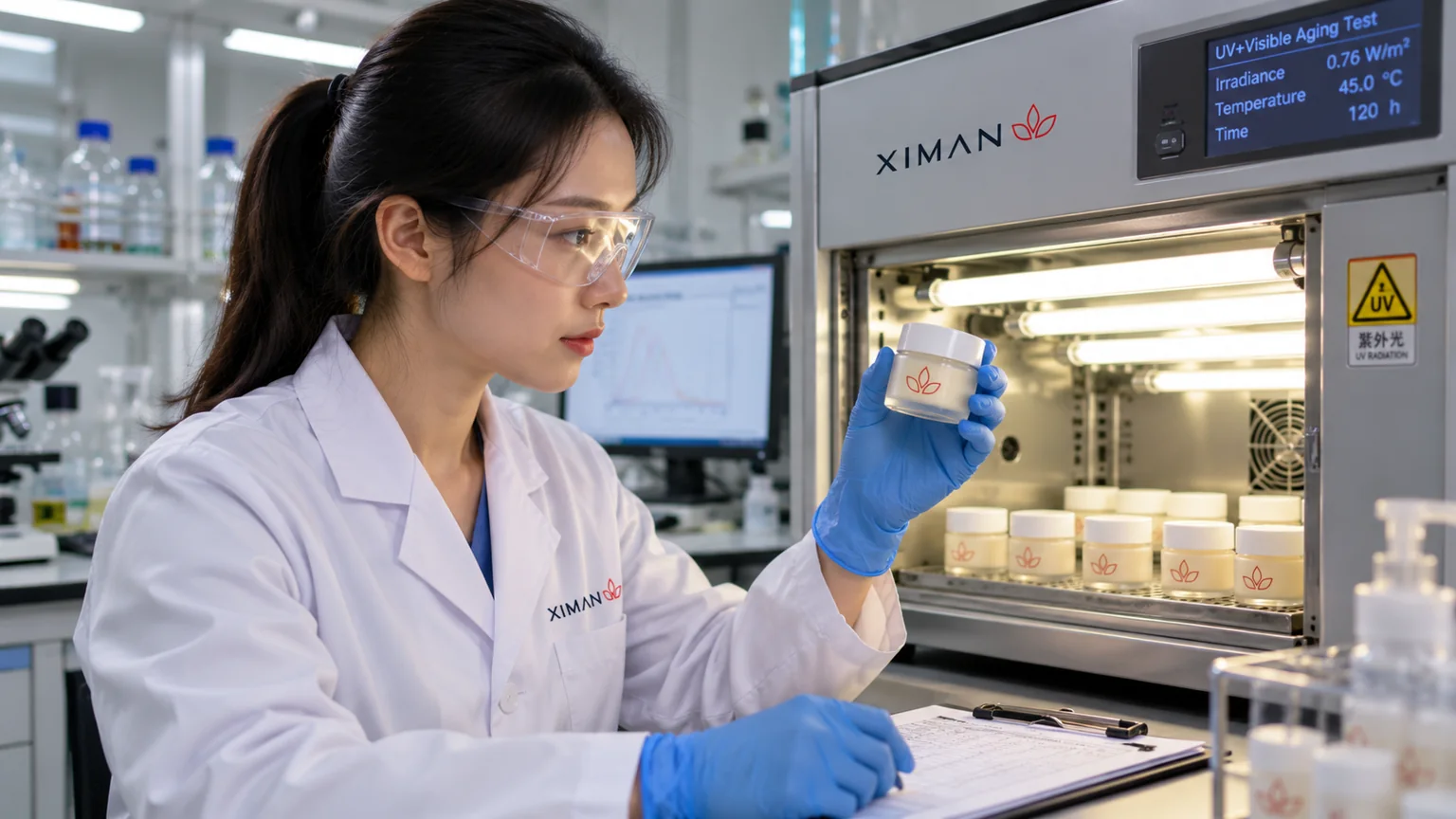
A preservation efficacy test assesses how a formulation responds to defined microbial challenges. ISO 11930:2019 provides a reference framework for evaluating antimicrobial protection, using preservation efficacy testing and/or a justified microbiological risk assessment for products that are not considered low risk. Its application should be appropriate to the specific formula and method.
Questions a buyer should ask about the report
First establish the sample identity. Was it the approved formula revision? Was it tested before or after a fragrance, active-ingredient or pH adjustment? Was the final report issued by a qualified laboratory, and can the supplier provide the actual method, organisms, observations and interpretation rather than only a screenshot saying “passed”?
Challenge testing is different from routine microbiological testing of a finished batch. One evaluates the formulation's antimicrobial protection under a defined challenge; the other assesses microbiological quality of sampled product at a particular time. Depending on product risk, both may have a role.
Cases that deserve extra scrutiny
- A water-based serum is reformulated with a botanical extract after its preservation test.
- A jar-packed cream is moved into a different dispensing system.
- A fragrance or pH adjustment is introduced to improve consumer acceptance.
- A brand requests an unusually low preservative level for marketing reasons.
- A product intended for high-frequency use changes its pack size or consumer-use assumptions.
None of these events automatically proves a failure. Each should prompt documented consideration of whether previous test evidence still applies.
Design a sensible testing sequence
Before spending on a final challenge test, establish a reasonably stable prototype, likely commercial pack and agreed target market. Document a preservation strategy, conduct relevant screening during development, lock the final formula, and decide which changes trigger retesting. Finished-product microbiological specifications and manufacturing hygiene controls should be treated as complementary measures, not substitutes.
The commercial mistake is scheduling a label print run immediately after a promising lab sample while treating microbiological assessment as an optional last step. If the test flags a weakness, the manufacturer may need to adjust the formula and repeat other assessments.
Check recovery controls as well as microbial reduction
A report can be misleading if residual preservative suppresses organisms during enumeration rather than only during the intended challenge period. Ask the laboratory how it demonstrates suitable neutralization or recovery for the tested formula. This is a method-suitability question for a competent laboratory, not a procedure a brand should improvise.
Review the reported organism-specific results, time points, formula identity and the criterion used to reach the conclusion. The public ISO 11930 overview identifies the standard's antimicrobial-protection scope; it does not provide the complete paid method or justify inventing its numerical criteria. A change to fragrance, pH, botanical load or packaging deserves a documented assessment of whether existing results remain relevant. If a sample fails, investigate formulation, processing and method suitability together before assuming that adding more preservative will solve the problem.
Frequently asked questions
Does an airless bottle eliminate the need for antimicrobial protection? Not necessarily. Package design can influence exposure, but the overall risk requires product-specific assessment.
Can every anhydrous product skip a challenge test? Certain low-risk products may be assessed differently, but the decision needs a documented scientific rationale rather than a blanket rule.
Is a low microbial count at batch release the same as a challenge-test pass? No. Release testing examines the sampled batch's microbiological condition. Challenge testing evaluates protection under its defined test conditions. They answer different questions and neither substitutes for manufacturing hygiene.
Next step: Ask XIMAN which microbial quality and preservative-efficacy evidence would be appropriate for your finished formula and packaging concept.
Sources & review date
- ISO 11930:2019 ↗ · Checked 2026-10-14
- ISO 22716:2007 ↗ · Checked 2026-10-14
Sources and check dates are listed above; applicability depends on the destination market and product conditions.
Discuss your market and product
Share your destination market, product category, project stage and estimated quantity to plan the next step.