Do not decide whether a cosmetics supplier is a factory or trading company from a single signal. Check whether it owns or directly controls manufacturing resources and whether contracting, production, quality and after-sales responsibilities are transparent. A trader can be useful, while direct factory access may reduce information loss for detailed formula development and technical discussions.
An overseas buyer approaching Chinese suppliers for the first time may struggle to distinguish a manufacturer from an intermediary. Both can accept orders, but communication arrangements and risks differ. These checks help establish who is behind the proposal.
Check the business license and manufacturing authorization
Both factories and trading companies have business licenses. A manufacturing business commonly lists cosmetics production and holds the applicable Cosmetics Manufacturing License. A trader may list sales or import and export activities without manufacturing itself. Request the business license and compare it with public NMPA manufacturing information. If the company has no identifiable manufacturing authorization, ask who actually makes the product. A trader may show its partner factory’s license, so compare the licensed address with the site shown to you.
Ask detailed manufacturing questions
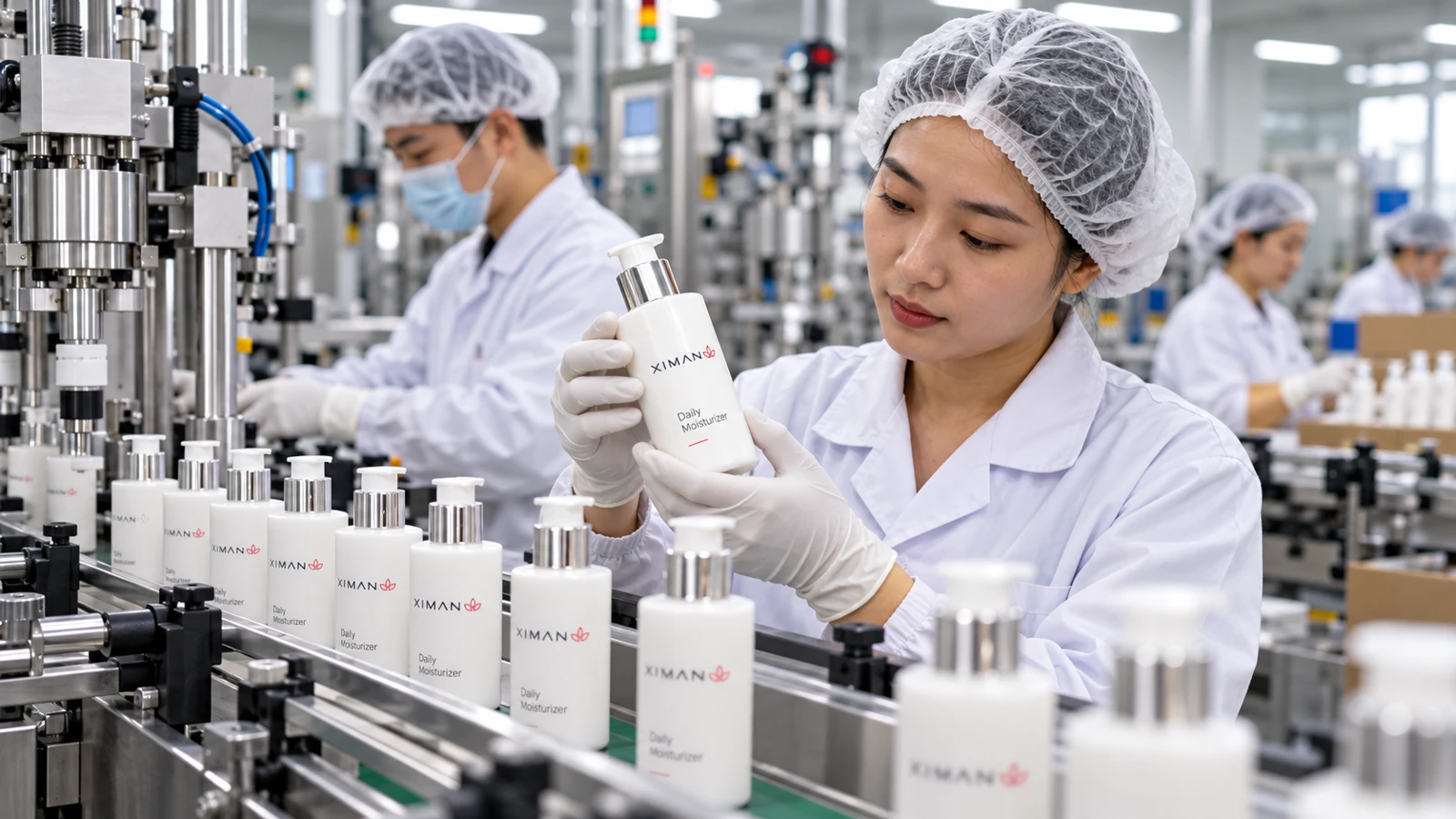
A team directly involved in production should be familiar with its workshop, equipment, materials and process. Ask about filling methods and quality inspections. A trading company may need to refer these questions to the manufacturer, which can slow or generalize the answer. Several specific technical questions can reveal how directly the supplier can access the information you need.
Understand how quotations and lead times are prepared
Factories and trading companies can have different quotation structures, communication chains and service arrangements. Establish the actual manufacturing entity, how formula and packaging changes reach it, who carries quality responsibility and whether production and quality systems can be reviewed transparently.
Customers sometimes bring us quotations from traders for comparison. In these discussions, we have been able to answer filling and quality inspection questions directly, whereas an intermediary may need a day or two to obtain the manufacturer’s response. Treat this as an experience to investigate, rather than a universal rule.
Request a live video factory assessment
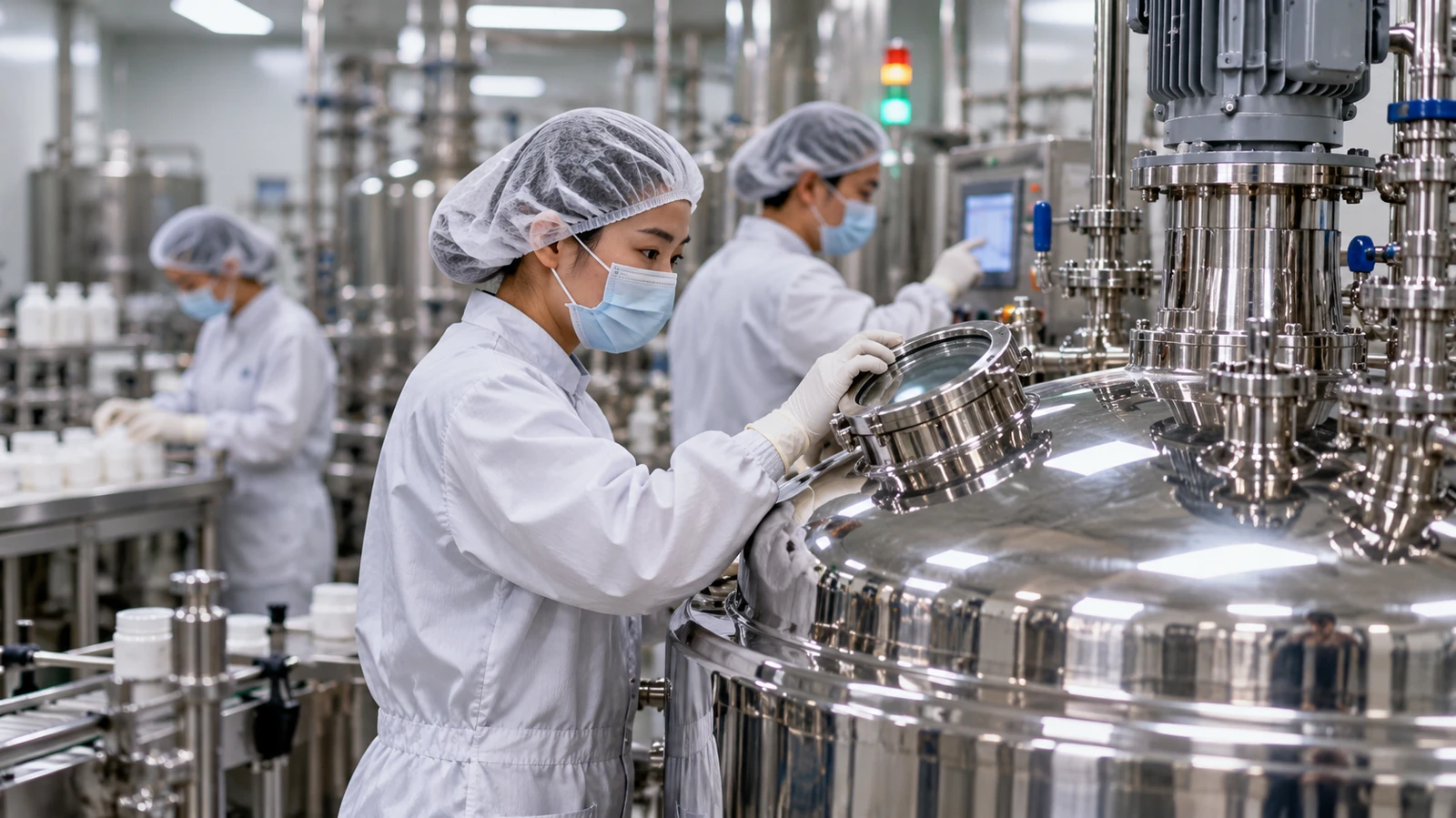
Ask for a live walk-through starting at the company or factory entrance and continuing into the workshop, warehouse and laboratory where access is appropriate. Look for identifiable materials and work in progress, and ask prepared questions during the visit. A prerecorded video alone provides limited evidence. If live access is declined, ask why and seek other verification; a willingness to support live checks can strengthen transparency.
Supplier judgment: distinguish the relationship, not just the label
Response speed is not a sufficient test. A trader may be highly professional, while a factory salesperson may need to consult R&D. Consistent technical information and verifiable manufacturing evidence provide a stronger basis for assessment.
Check continuity in the live video. One continuous visit from the company or factory signage to relevant technical areas is more useful than a collection of edited clips. Ask unplanned questions about what is visible.
If you choose a trader, document responsibility. Language support, local service or supply-chain coordination may make a trading company a suitable partner. The agreement should identify the actual manufacturer, quality requirements, formulation information, lead times and responsibility for resolving quality issues.
Common differences to investigate
| Observation | Typical direct-factory arrangement | Typical trading-company arrangement | How to verify |
|---|---|---|---|
| Manufacturing authorization | The manufacturing entity can commonly be identified directly | Uses the partner manufacturer’s authorization | Check the entity and address |
| Technical questions | Can coordinate directly with R&D and quality teams | Refers questions to another party | Ask three specific technical questions |
| Live factory access | Can often arrange relevant production or laboratory views | May show a partner site | Request a continuous visit from signage to key areas |
| Quotation structure | May explain bulk product, packaging and processing separately | May present an overall package price | Request an itemized quotation |
| Responsibilities | A shorter chain to manufacturing and quality responsibility | Intermediary responsibilities need clarification | Review the agreement and after-sales terms |
Project FAQs
Is a trading company always more expensive? No. Supply-chain coordination can reduce some purchasing or communication costs. Assess total service value rather than the supplier’s label alone.
Do numerous factory photos prove ownership? No. Images are clues. Combine them with manufacturing authorization, live video, addresses and the contracting entity.
What is the most practical check? Ask the supplier to explain formulation, packaging, testing, filling and delivery for one real project, supported by live site verification.
Recommended action
Start with three checks: whether the documents identify the manufacturer, whether technical questions receive specific answers and whether live site verification is possible. Raise these requirements in the first discussion and use the answers to decide the next step.
Next step: talk to XIMAN
To investigate project-relevant manufacturing capability, XIMAN can coordinate information on the factory, laboratory, production and quality management for your assessment.
Sources & review date
- XIMAN project preparation and sourcing guidance ↗ · Checked 2026-10-11
- NMPA manufacturing and marketing provisions ↗ · Checked 2026-10-11
Sources and check dates are listed above; applicability depends on the destination market and product conditions.
Discuss your market and product
Share your destination market, product category, project stage and estimated quantity to plan the next step.