Choosing a cosmetics manufacturer in China means checking whether a supplier can take your product from the brief through formulation, testing and scale-up to consistent delivery. A factory that looks large is not necessarily the right partner. Assess six areas: manufacturing authorization, R&D capability, quality management, export coordination, commercial fit and transparency. Ask for evidence in each area.
The right manufacturing partner gives a product project a stronger foundation; the wrong fit can create problems throughout development and delivery. For an overseas brand sourcing in China for the first time, the following five steps provide a practical way to narrow the shortlist.
Step 1: Verify the manufacturing license
Cosmetics manufacturing in China requires the applicable manufacturing authorization. Before working with a supplier, check the manufacturing entity, production address and license status through public National Medical Products Administration (NMPA) channels. Clarify the relationship between the actual manufacturer, your day-to-day contact and the contracting entity. Consistent public records matter more than a photograph of a certificate.
Step 2: Assess formulation and R&D capability
Does the manufacturer have its own R&D team? Can it develop a formula to your brief, or offer existing formulas to evaluate? These questions help establish whether it can deliver the product characteristics you need. Ask the team to explain its development process and provide relevant stability or efficacy test documentation. A previous-formula catalogue can help you understand the available starting points and make technical discussions more efficient.
Step 3: Check export experience
Ask which markets the supplier has served. Experience with your destination market can make communication, documentation and compliance coordination smoother. Request redacted export records or sample shipping documents. These demonstrate delivery experience, rather than guaranteeing that your new product will meet every requirement. A manufacturer new to overseas orders may face greater uncertainty in communication, document preparation and delivery coordination.
Step 4: Compare quotations and minimum order quantities
The lowest quotation is not automatically the best. An unusually low price may reflect different materials or a narrower service scope. Confirm the minimum order quantity (MOQ), meaning the smallest order the supplier will accept. A smaller brand can ask about lower-volume options. Compare quotations on the same formula and packaging specifications; prices based on different requirements are not directly comparable.
Step 5: Arrange a factory assessment
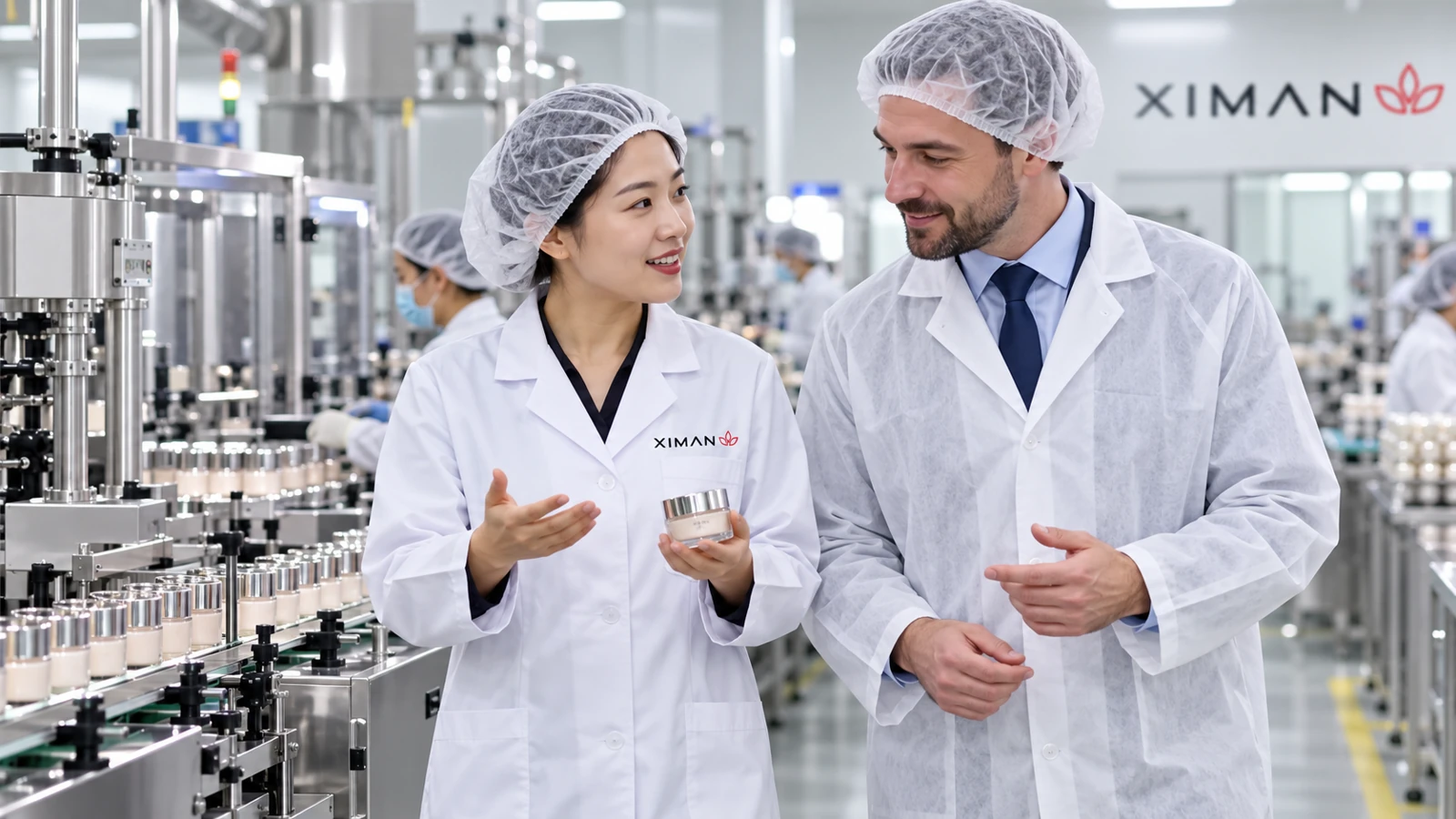
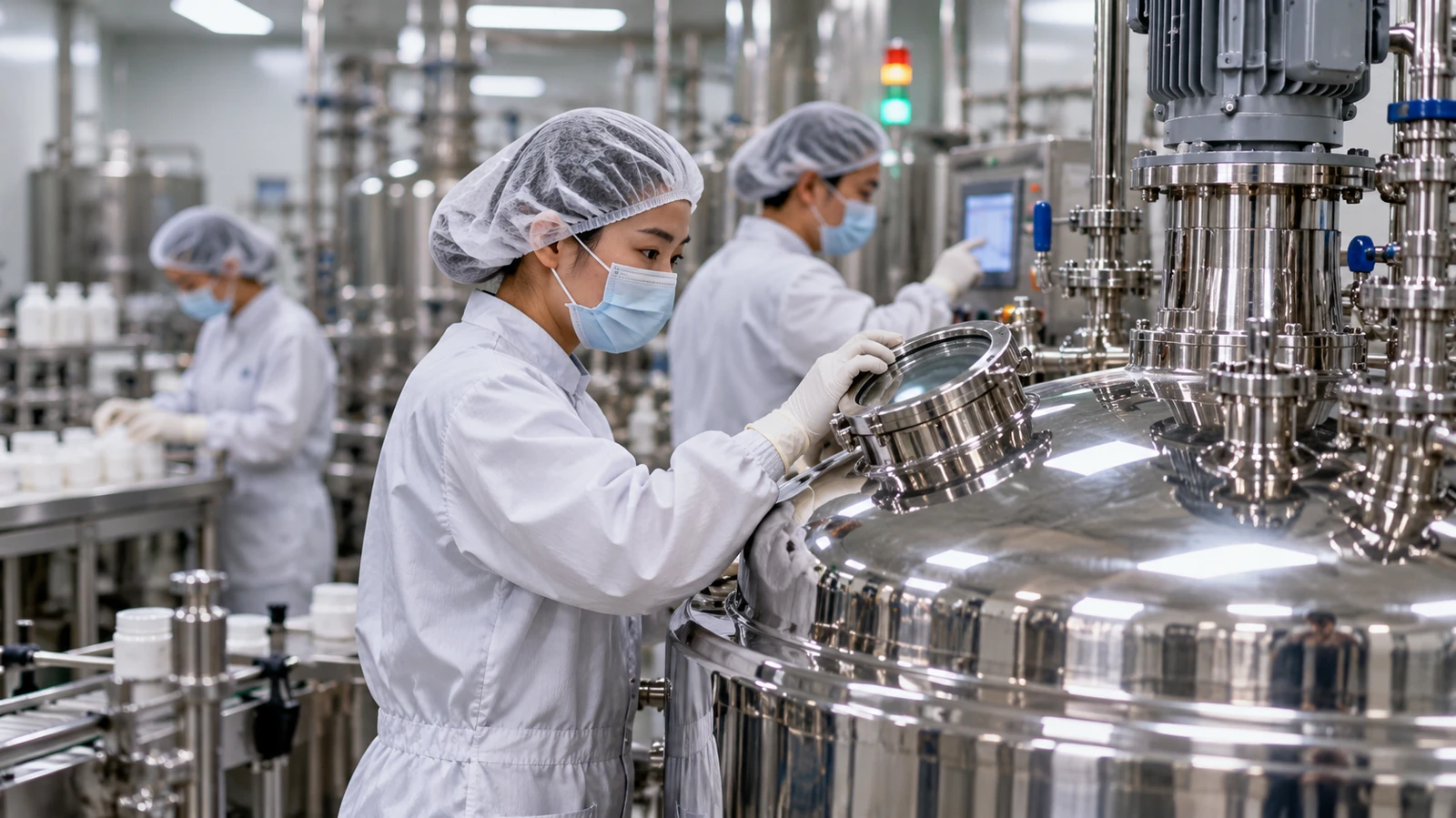
Visit the factory if practical. Otherwise, arrange a live video assessment covering the production area, warehouse and laboratory. Send a question list in advance and ask the supplier to demonstrate each point. Focus on a clean production environment, identified raw materials and visible quality inspection steps. Review the supplier’s manufacturing capabilities alongside the evidence requested for your own project.
In our order discussions, we have found that many customers ask about price before checking credentials. We recommend reversing that sequence: verify the credentials first, then discuss price. This can reduce time spent on unsuitable suppliers.
Buyer judgment: how to evaluate a factory in practice
Ask what a certificate actually establishes. A certificate may confirm a particular authorization or management-system status; it does not automatically prove strong R&D, suitability for your target market or reliable delivery. Keep authorization evidence separate from project-capability evidence. The former addresses legal status; the latter requires formulation, quality and delivery records.
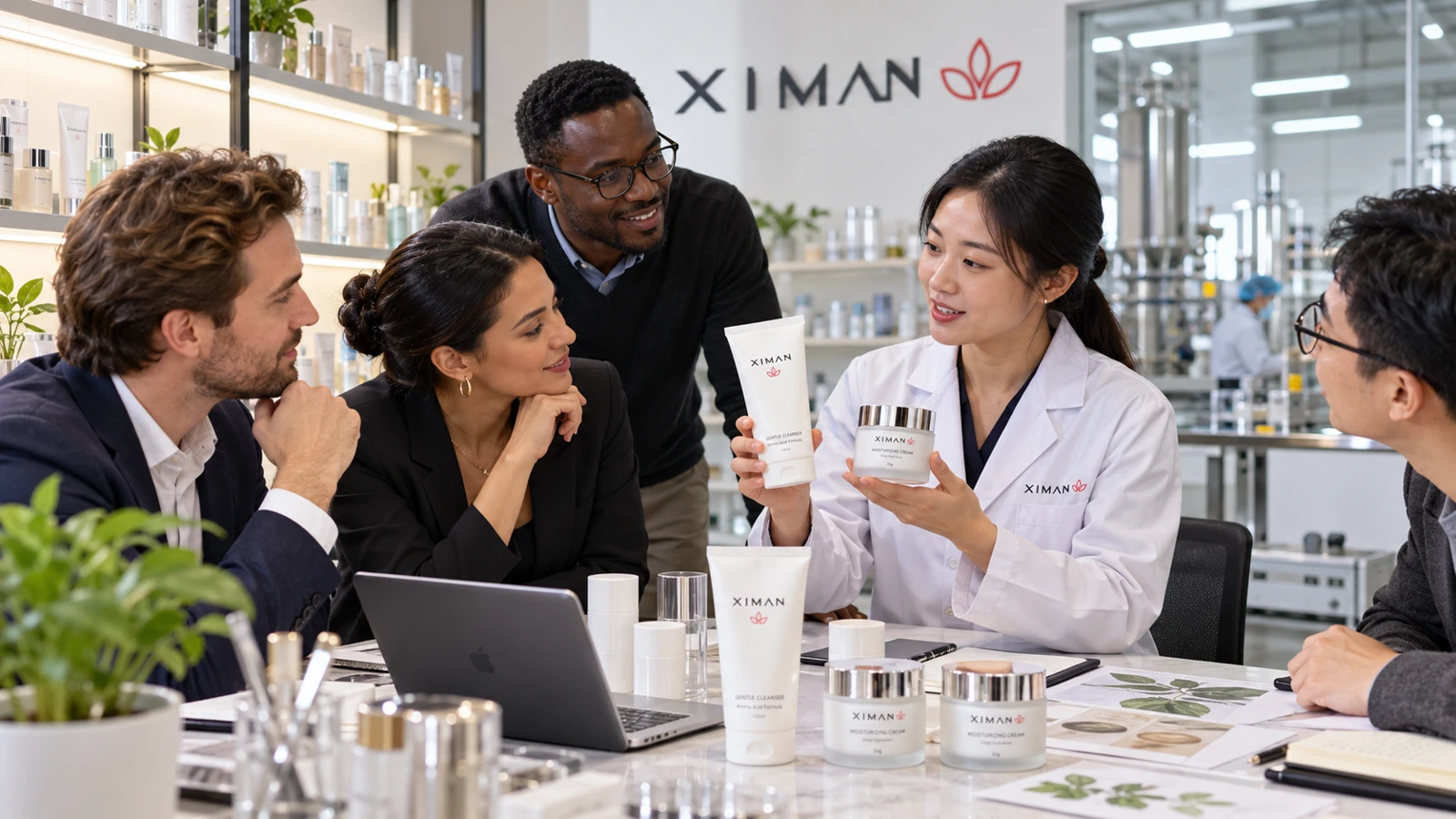
Turn the assessment into a project simulation. Bring a real brief: the target market, desired skin feel, estimated quantity and packaging format. Observe whether the team can explain formulation options, testing priorities, potential risks and quotation assumptions. A team that breaks down these questions gives you a stronger basis for further assessment than one that offers only a price. The OEM and ODM services discussion should start with these project requirements.
A low price is not itself a warning sign; an unexplained low price is. Established formulas, standard packaging, larger purchasing volumes or greater production efficiency can reduce cost. A reduced service scope can also do so. The key question is whether the supplier can explain the difference.
Supplier evaluation scorecard
| Assessment area | Suggested weight | Evidence to check | Warning signs |
|---|---|---|---|
| Manufacturing entity and credentials | 20% | Manufacturing license, entity name, production address and public records | The supplier cannot explain the relationship between the licensed entity and actual manufacturer |
| R&D and formulation | 20% | R&D laboratory, formulation brief, test documents and technical discussions | Promises to make anything without explaining technical limits |
| Quality management | 20% | Incoming, in-process and finished-product inspection records; retained samples and traceability | Shows certificates but will not share relevant routine records |
| Export and compliance coordination | 15% | Destination-market experience, redacted documents and a document checklist | Claims exports to many countries without explaining specific requirements |
| MOQ, quotation and delivery | 15% | Itemized quotation, lead-time starting point and reasons for MOQ | A low price with unclear scope, materials, packaging or responsibilities |
| Transparency and responsiveness | 10% | Live video, a named project contact and documented issue resolution | Avoids live checks or repeatedly changes answers to important questions |
Frequently asked questions for overseas buyers
What should I request when first contacting a factory? Start by confirming the manufacturing entity and basic credentials, then share a one-page product brief. This helps you assess both authorization and project fit.
What if I cannot visit China for an assessment? Combine live video, checks against public records, samples and test documentation, and an independent third-party assessment where appropriate. Do not rely solely on a prerecorded promotional video.
Is a larger factory always better? No. A large operation may suit established high-volume orders, while a smaller brand also needs to assess MOQ, sampling flexibility, R&D response and communication efficiency.
Key takeaway
Use a clear screening sequence: credentials, R&D, export experience, quotation comparison and factory assessment. Put your requirements into a checklist and ask each shortlisted manufacturer to respond point by point. Thorough answers and complete supporting documents provide a better basis for deciding who deserves further evaluation.
Next step: talk to XIMAN
If you are comparing cosmetics manufacturers in China, send XIMAN your product category, target market, estimated quantity and customization requirements. We can use this information to discuss possible cooperation and identify the key documents and decisions that still need confirmation.
Sources & review date
- NMPA: Provisions for Supervision and Administration of Manufacturing and Marketing of Cosmetics ↗ · Checked 2026-10-11
Sources and check dates are listed above; applicability depends on the destination market and product conditions.
Discuss your market and product
Share your destination market, product category, project stage and estimated quantity to plan the next step.