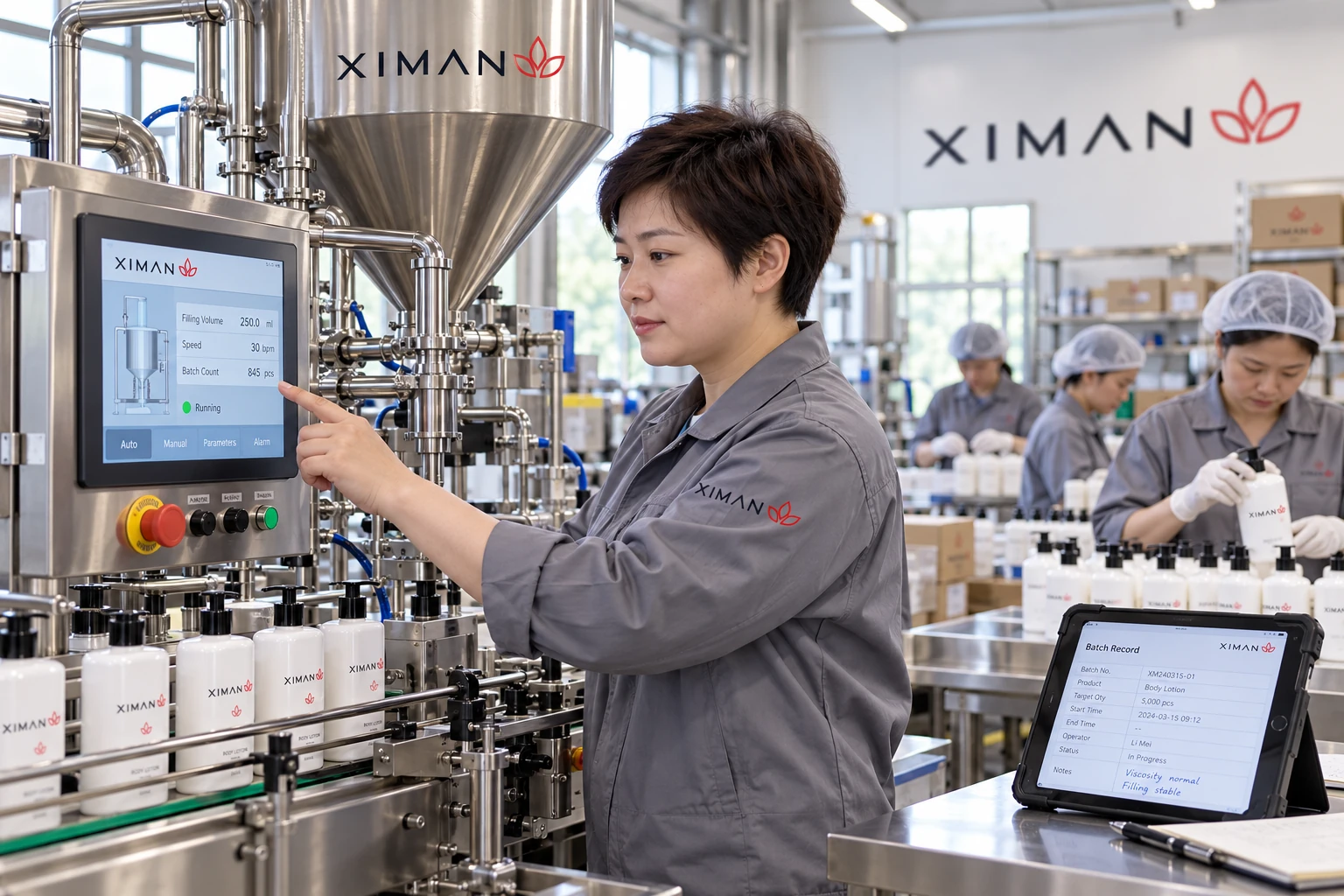
Effective negotiation with a cosmetics manufacturer in China involves exchanging workable conditions. Quantity, reorder forecasts, formula complexity, standard packaging, payment arrangements, timing flexibility and longer-term planning can all influence an offer.
Quotations for an apparently similar cream may differ because the underlying assumptions are different. Align the scope before deciding what to negotiate.
Align the specification before comparing prices
Write down the formula direction, product specification, packaging material and printing requirements. Ask suppliers to quote to the same standard. Comparing different materials or components does not provide a useful basis for negotiation.
Discuss credible reorder plans
A small first order may carry a higher unit cost than a larger, repeatable purchasing program. Share realistic quarterly quantities or expected order frequency where available. A credible plan can support discussion of price tiers without implying a commitment you cannot make.
Negotiate payment and timing together
Price is one of several commercial terms. Discuss deposit arrangements, payment milestones and feasible lead times alongside it. A more predictable production window may improve planning. State what flexibility you can offer and what you need in return.
Consider more than the lowest price
Investigate an unusually low quotation: it may reflect different materials, fewer tests or a narrower service scope. Assess qualifications, responsiveness and past cooperation evidence as well as cost. Delayed answers and unclear explanations can also add project-management effort.
Record the agreement
Put the agreed price, MOQ, lead time, payment terms and revision scope into a formal quotation or written confirmation before ordering. Clear records reduce disagreement about what each party accepted.
In our experience, customers who explain their purchasing plans clearly often reach more workable terms. A realistic longer-term discussion helps us evaluate where flexibility is possible.
Negotiation assessment: improve the overall terms
Establish a baseline formula, packaging, quantity and service scope first. Once these are fixed, discuss which changes could improve cost or timing.
Do not exaggerate reorder quantities. Share a forecast range when supported by your sales planning. Credibility develops through actual orders and clear communication.
Carry the agreed price, MOQ, timing, payments, sample credits and included revisions into the quotation, purchase order or contract. Do not leave important terms only in an informal chat.
Negotiation options beyond a price reduction
| What you can offer | What you can discuss |
|---|---|
| Clearer annual forecasts | Price tiers and material planning |
| Established formulas or standard packaging | Lower upfront work and potentially shorter lead time |
| A stable production window | More predictable capacity scheduling |
| Clear payment milestones | Defined commercial conditions |
| Fewer frequent changes | Lower project-management effort |
| Consolidated SKUs or batches | Purchasing and production efficiencies |
Frequently asked questions
What discount can I expect on a first order? There is no standard percentage. It depends on quantities, specifications, materials and commercial conditions.
When should I stop pushing the price down? Reconsider when further reductions would require unsuitable changes to specification, service or necessary risk allowances.
Which other terms deserve attention? Lead times, replenishment, MOQ, payment milestones, packaging inventory and after-sales responsibilities can be equally relevant.
Project conclusion
Use consistent specifications, exchange workable conditions and keep written records. Send the same brief to two or three suppliers, discuss first-order and reorder options, and confirm the final terms before proceeding.
Discuss your project with XIMAN
Share your standardized product specification with XIMAN. We can provide a quotation and key conditions on that basis to support a consistent comparison.
Sources & review date
- XIMAN project preparation and sourcing guidance ↗ · Checked 2026-10-11
Sources and check dates are listed above; applicability depends on the destination market and product conditions.
Discuss your market and product
Share your destination market, product category, project stage and estimated quantity to plan the next step.