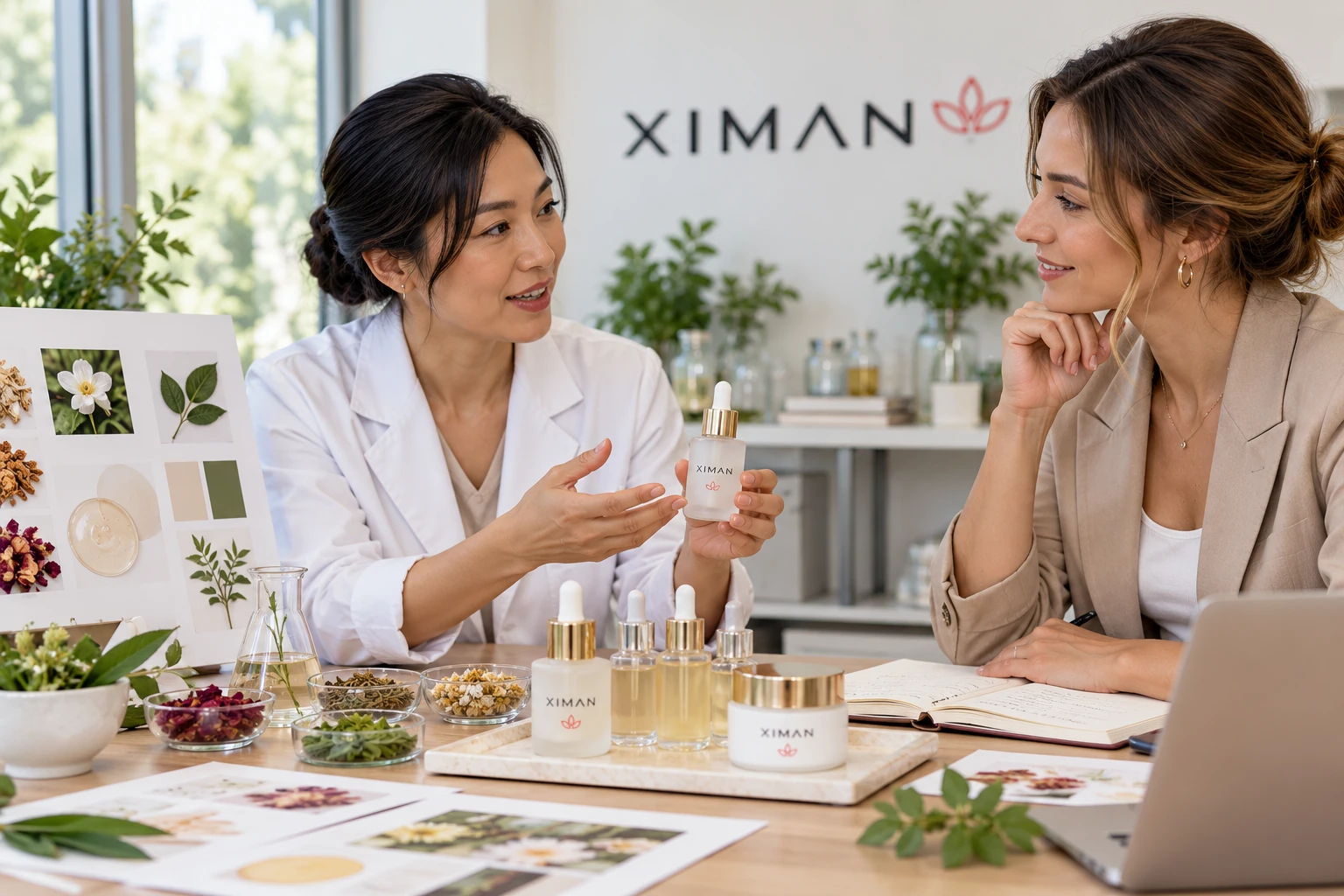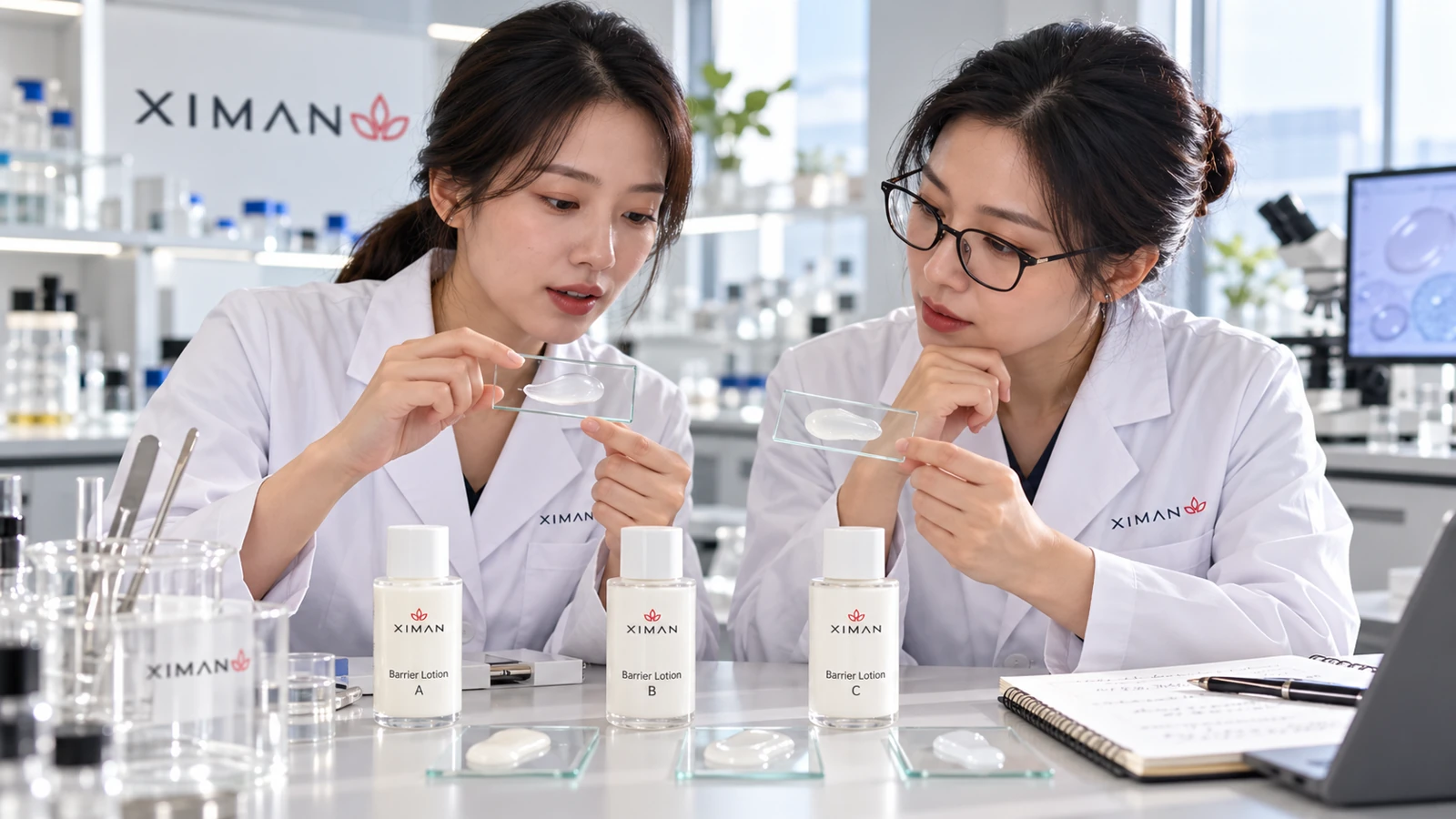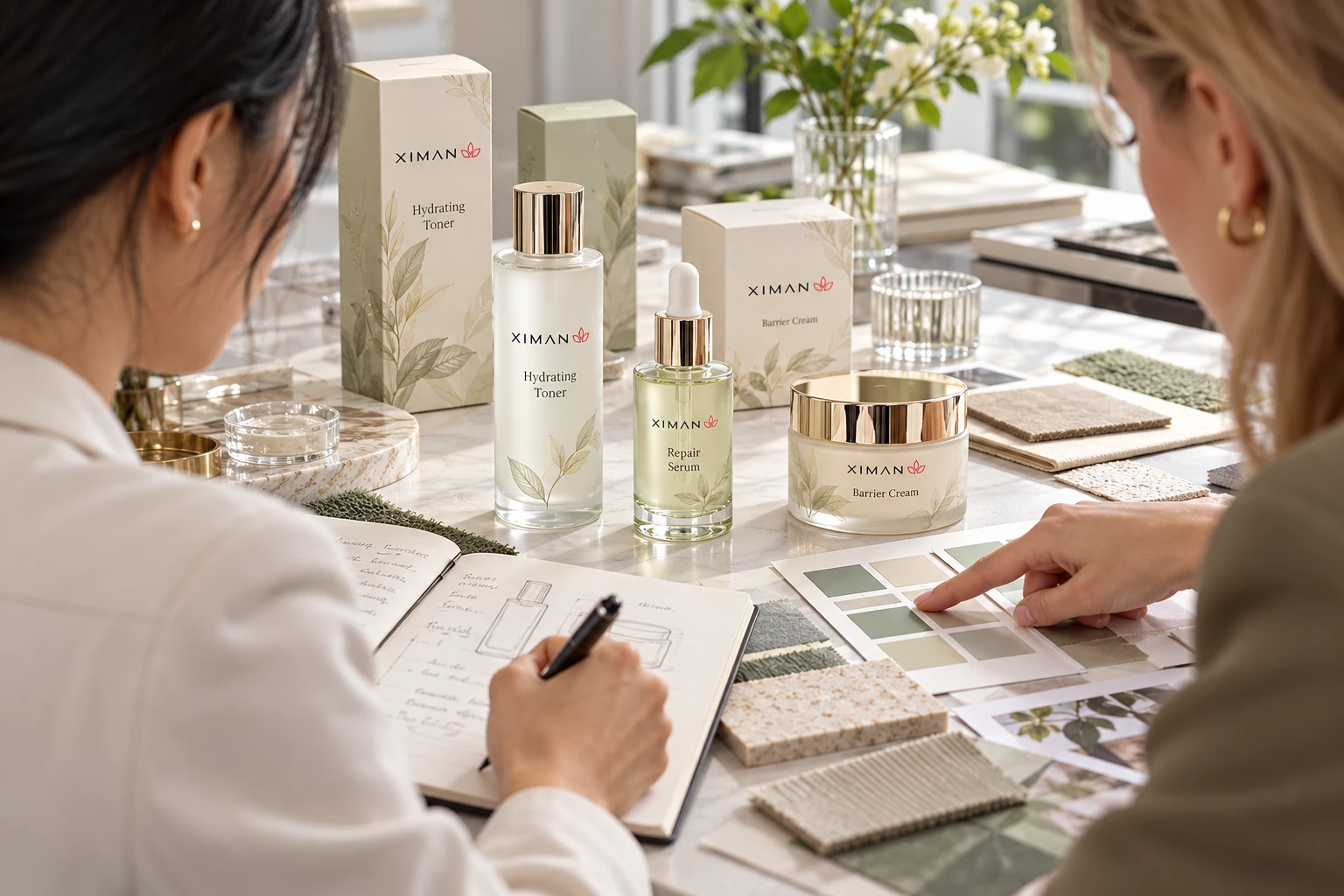
A custom skincare formulation brief needs more detail than a list of broad benefits. Connect the target user, main concern, intended positioning, skin feel, ingredient preferences, exclusions, price range and destination market.
An inquiry for a “good serum” leaves the supplier guessing and can lead to repeated revisions. Specific goals help the development team understand what you want to evaluate.
Define the target skin type and benefit priorities
Explain who will use the product and the main concern it should address. A moisturizing and soothing direction for dry skin in colder weather is clearer than a general request for a premium aging-care serum. Give primary goals priority, and consider separate products if the brief combines conflicting aims.
Explain references and ingredient direction
Share suitable reference products and identify the features that matter, such as skin feel, fragrance or absorption. List ingredient preferences and exclusions, including clearly defined fragrance or alcohol requirements where relevant. Add local price positioning and customer context rather than sending only a photograph.
Describe texture and skin feel
Specify a watery or creamy texture, a matte or more luminous finish, and the desired residual feel. Describe observations from products you have tried, including what you dislike. These are development targets to assess through samples, rather than claims to print without evidence.
Review intended claims early
Consider the wording planned for labels and product pages during development. The acceptable claims and supporting evidence depend on the destination market. Coordinate the review with appropriate regulatory support before committing to packaging.
When a customer asks us for a potential bestselling serum, we first clarify skin type, positioning and sensory goals. A focused discussion provides a better basis for sampling than developing against an undefined idea.
Development assessment: turn goals into requirements
Separate formulation objectives from marketing claims. A product can be developed toward moisturizing, soothing or wrinkle-appearance goals, while final label and advertising wording requires appropriate evidence and market review.
Adding more popular ingredients does not necessarily improve a formula. Consider stability, solubility, pH, system compatibility and the user experience as part of the overall formulation.
Treat sensory descriptions as technical targets. Terms such as non-sticky, fast absorbing or rich but not greasy can guide sample development and be refined through structured feedback.
A one-page formulation brief
| Field | Example project direction |
|---|---|
| Target user | Adults aged 25–40 with dry or sensitive-feeling skin |
| Primary objective | Prioritize moisturization and barrier-support positioning; brightening is secondary |
| Product form | A lightweight cream for day or night use |
| Skin feel | Fast absorbing, not heavy, with limited residual film |
| Ingredient preferences | Evaluate options such as ceramides or peptides |
| Exclusions and preferences | Define fragrance-free, vegan or other requirements precisely |
| Destination | Specify the intended countries or regions |
| References | Explain the relevant texture, positioning or packaging features |
Frequently asked questions
How many benefits should I specify? Rank the goals instead of treating every selling point as equally important. The suitable number depends on the product concept.
Can I specify an ingredient and concentration? You can propose a target, but development must assess applicable requirements, stability, supporting evidence and compatibility.
Should I ask for an exact copy of a competitor? Define the specific features you want to reference and respect intellectual property rather than requesting a one-to-one copy.
Project conclusion
Write a one-page brief covering skin type, benefit priorities, references, sensory targets and claim constraints. Use the same brief when comparing how suppliers understand the project.
Discuss your project with XIMAN
Send XIMAN your intended users, key goals, texture, references, ingredient preferences and markets. These details help make the formulation discussion specific from the start.
Sources & review date
- XIMAN project preparation and sourcing guidance ↗ · Checked 2026-10-11
Sources and check dates are listed above; applicability depends on the destination market and product conditions.
Discuss your market and product
Share your destination market, product category, project stage and estimated quantity to plan the next step.