Start with the makeup and removal routine
A useful makeup remover brief identifies what the product is expected to remove and how consumers will use it. Foundation, long-wear lip products, mascara and other cosmetic films can present different removal tasks. One favorable test with one foundation does not demonstrate removal of every waterproof makeup product.
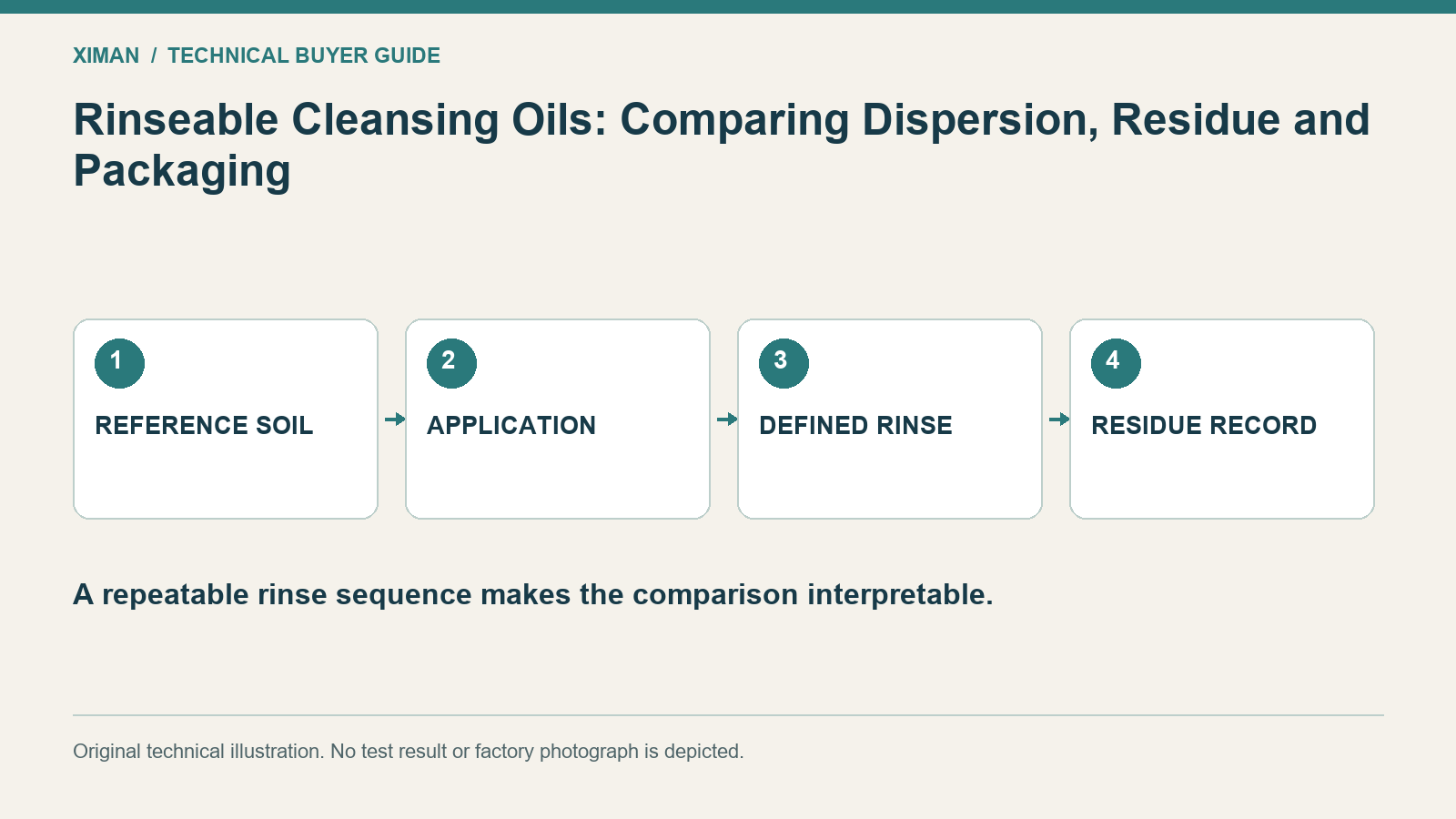
Define the quantity applied, contact time, rubbing or wiping procedure and any rinse or second cleanse. A formula requiring extended rubbing may produce an acceptable final appearance while failing the intended gentle routine. Capture the process required to achieve the result rather than reporting only a selected after-photo.
Keep the makeup references identifiable and record their application and setting conditions. The commercial benchmark can change over time, so its formula version or purchase details should be retained where practical for meaningful repeat comparison.
Compare formats against the same task
Oil, balm, micellar and biphasic formats offer different application experiences. The better choice depends on the intended makeup and routine, not on a universal ranking of cleansing strength. A clear liquid may suit a cotton-pad method, while a balm may suit direct application followed by rinsing.
| Format | Development question |
|---|---|
| Cleansing oil | How does it spread, rinse and leave residue? |
| Cleansing balm | How does pickup, softening and water addition affect use? |
| Micellar liquid | What dose and wiping effort achieve the target result? |
| Biphasic liquid | Does instructed shaking provide a consistent application? |
If the formats use different instructions, compare the complete instructed routine and explain that distinction. A study should not force one product into an inappropriate method just to generate a simple winner.
Control removal measurements and interpretation
Choose measurements that address the claim. Residual color or image analysis can describe a specific removal outcome under defined conditions. Consumer perception of cleanliness, comfort and residue provides different information. A panel's preference should not be described as a laboratory measurement of removal efficiency.
Use consistent lighting, camera settings and assessment methods when photographs support comparison. Where quantitative results are proposed, define the calculation and its limitations. Removing more visible pigment does not necessarily mean every component of a makeup film was removed.
Avoid claims of complete removal from an unrepresentative small set of examples. The exact wording should reflect tested products, dose and application. Claims such as no rubbing or suitable for waterproof mascara should be evaluated directly rather than inferred from a general cleansing result. [2]
Review eye area use as a specific exposure
If the intended product is used around the eyes, obtain an appropriate safety assessment for the formula, instructions and exposure. A prototype tolerated on another skin area does not independently establish eye-area suitability. Qualified reviewers should determine the relevant evaluation and wording. [1]
Do not use ophthalmologist tested as a decorative phrase without a documented study and a clear interpretation of what was evaluated. It also should not be converted into a guarantee that no consumer will experience discomfort. Product labels and online copy need to describe actual evidence.
Fragrance, residue and wiping force can affect the experience and should be assessed in the intended routine. Unwanted sensations deserve a documented review rather than a claim that they prove effective cleansing.
Assess mixing and dispensing in the final pack
For a biphasic remover, define the shaking instruction and observe the product delivered immediately afterward and across realistic delays. Phase separation may be intentional, but it should remain distinguishable from other changes such as unexpected particles, altered odor or impaired dispensing.
Evaluate the pack near full and near empty. The opening, cap and flow control affect the dose applied to a pad. For oils and balms, assess leakage and residue on contact materials. For an aqueous format, product protection should reflect repeated opening and consumer handling. [3]
A final approval should link the exact formula, makeup references, removal method, package, safety assessment and claims. If the brand changes the intended routine from rinse-off to no-rinse, revisit the relevant exposure and evidence rather than updating only the instructions.
Frequently asked questions
Can one makeup remover test support all waterproof makeup claims? Not automatically. Define the representative products and method, then make wording proportionate to the actual evidence.
Does intentional phase separation mean a biphasic product failed? No. Evaluate it against the expected specification, mixing behavior and other observations. Unexpected changes still require investigation.
Can eye-area suitability be inferred from a facial skin test? No. The actual intended exposure needs an appropriate assessment by qualified reviewers.
Project discussion: Give XIMAN the makeup references and removal routine you want to support so the format and evaluation method can be chosen together.
Sources & review date
- [1] FDA Product Testing of Cosmetics ↗ · Checked 2026-10-14
- [2] Commission Regulation EU No 655/2013 cosmetic claims ↗ · Checked 2026-10-14
- [3] FDA Microbiological Safety and Cosmetics ↗ · Checked 2026-10-14
Sources and check dates are listed above; applicability depends on the destination market and product conditions.
Discuss your market and product
Share your destination market, product category, project stage and estimated quantity to plan the next step.