A rinseable cleansing oil should be assessed as a product used with water, a defined application procedure and a specific dispensing package. A development brief becomes clearer when removal performance and after-feel are evaluated as separate questions.
Define the use scenario before selecting a sample
Specify the cosmetic soils or reference materials to be evaluated, the product amount, the application sequence and the water conditions. Identify the limitations of any laboratory surface used for screening. Do not assume one test represents every makeup product or consumer routine. A repeatable comparison is more useful than a broad statement that a sample removes everything.
Separate dispersion from the after-feel decision
Observe how the sample behaves during the agreed addition of water, then assess residue using a separately defined procedure. Keep the criteria and sample identities recorded before preference discussions begin. If a composition change alters both the oil blend and the emulsifying system, avoid assigning the result to only one of them without a suitable controlled comparison.
Review the complete product system
Check the actual dispensing package, closure and handling conditions with the selected formula. Ask the technical team to identify the stability, safety and microbiological assessment appropriate to the composition and intended use. An anhydrous description does not eliminate the need for that review. Avoid claims about treating skin conditions or altering pores; keep the article and product copy within cosmetic use.
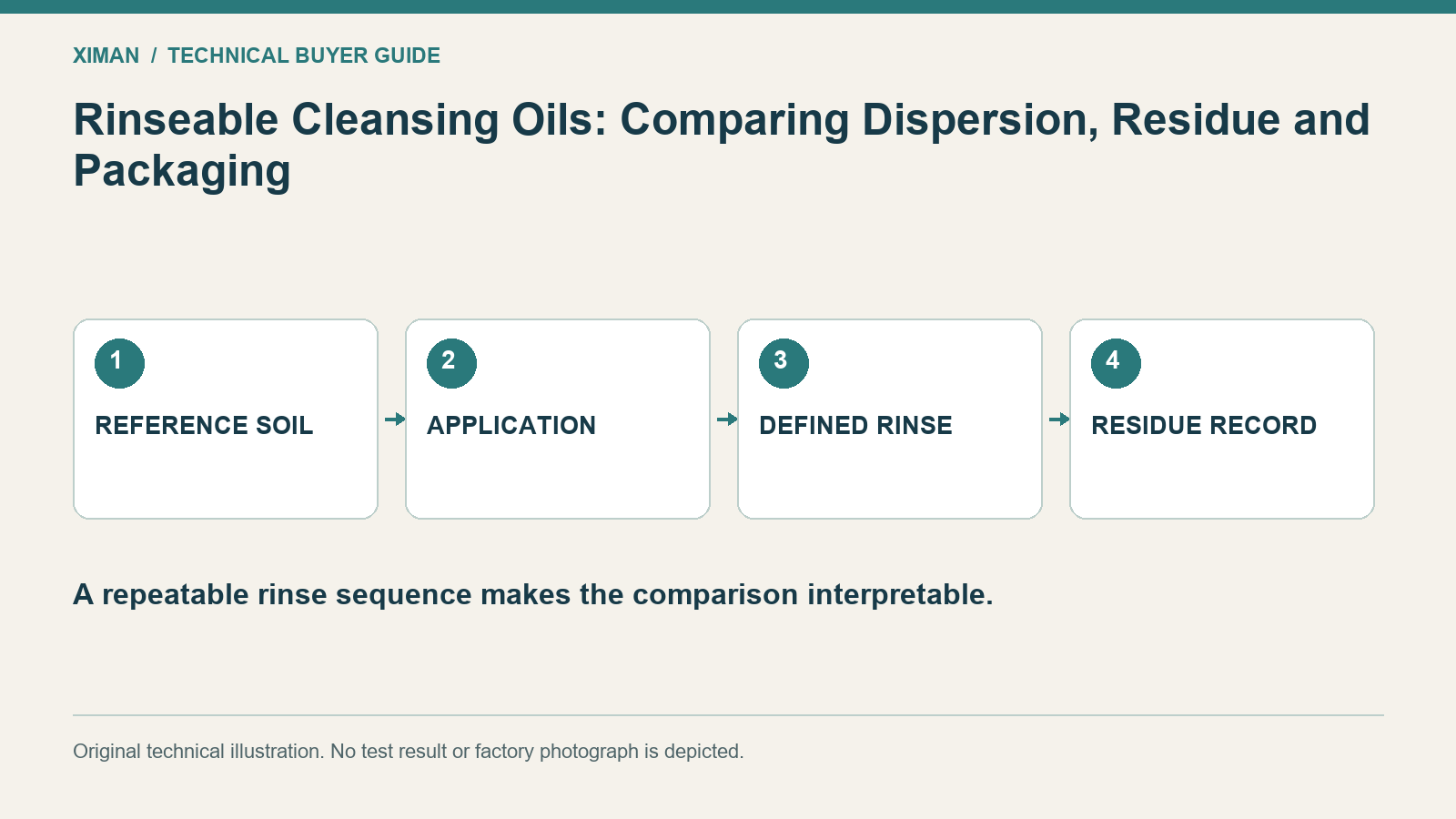
Make the rinse sequence part of the method
Record the interval and manner in which water is introduced after application, together with the initial product amount and reference soil. A comparison can change if one sample receives a different rinse history. Define how the final surface is examined and what counts as residue under the procedure. Use that record to compare candidates instead of assigning an undefined complete-cleaning label.
Package testing should address how the intended user handles an oil-format product around water, including closure and dispensing observations. Ask the safety and preservation reviewers which conditions belong in the finished-product assessment; the absence of deliberately added water is not a complete assessment by itself. Keep the chosen use instructions consistent with what the package and formulation work actually examined.
A purchasing and review record
| Decision point | Record to request | Action before approval |
|---|---|---|
| Use scenario | Reference soil and consistent procedure | State what was actually tested |
| Residue | Separate endpoint and observation record | Do not confuse dispersion with preference |
| Packaging | Actual pump and closure | Review the complete formula-package system |
Frequently asked questions
Does rapid visible dispersion prove complete makeup removal?
No. Dispersion is one observation. A removal claim should be supported by an appropriate assessment using specified reference materials and conditions, with its limits clearly understood by the brand.
What should a brief say when two candidates remove the reference soil similarly but feel different?
Report the removal observation and the sensory preference separately. Select against the agreed customer brief, and preserve the test conditions and remaining safety, stability and packaging questions rather than declaring one result universally superior.
Define the next project decision
Define the cleansing-product brief and intended rinse routine before treating every remaining sensory film as a failure.
Define the intended cosmetic format, destination and outstanding decision in a formulation brief. Discuss that scope with XIMAN and request confirmation of the information, development work and assessment responsibilities appropriate to the project. A concept diagram or supplier example does not document an actual XIMAN factory trial.
Sources & review date
- ISO/TR 18811 public abstract ↗ · Checked 2026-10-28
- FDA: product testing and the scope of cosmetic safety evidence ↗ · Checked 2026-10-28
Sources and check dates are listed above; applicability depends on the destination market and product conditions.
Discuss your market and product
Share your destination market, product category, project stage and estimated quantity to plan the next step.