Give each cream a clear role in the range
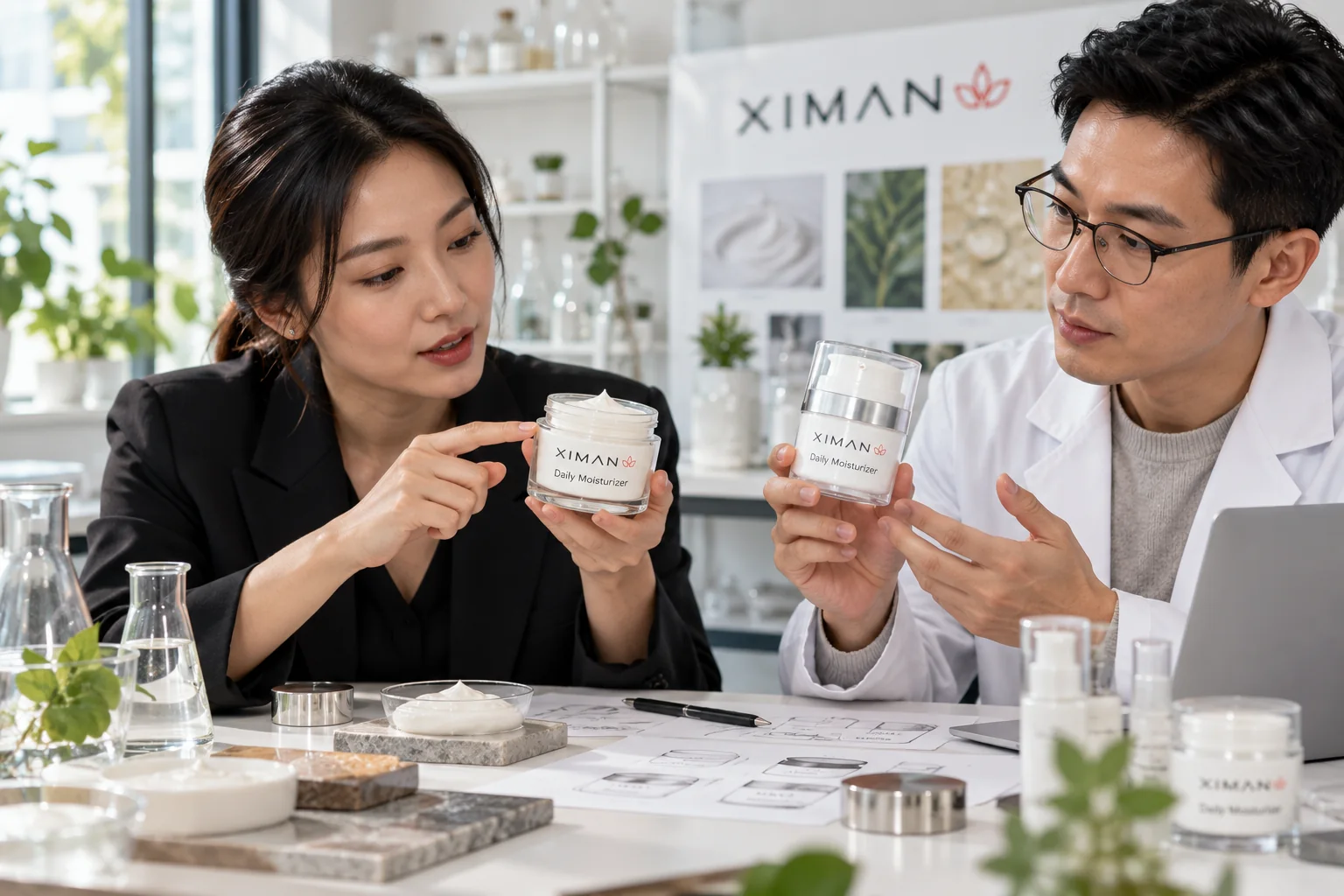
Face cream manufacturing starts with a defined product role: a lightweight gel cream, richer emulsion or another feasible texture for a specific routine. XIMAN can discuss the brief and development conditions; formula suitability, manufacturing scope and supporting evidence need confirmation for the particular project.
Begin with use occasions rather than names. Do consumers need a light morning finish under makeup, a richer evening texture, or a fragrance-free option? Only add another SKU when it provides a meaningful reason to exist.
Develop a product architecture
| Product role | Sensory goal | Development implication |
|---|---|---|
| Daily gel cream | Lightweight, quick-spreading | Rheology and pump compatibility |
| Rich face cream | Cushioned, lasting comfort | Oil phase and after-feel balance |
| Fragrance-free cream | Minimal fragrance-related sensory exposure | Ingredient and packaging review |
| Makeup-friendly moisturizer | Comfortable layering | Pilling and compatibility assessment |
These descriptions are development targets, not pre-established efficacy outcomes. The product brief should separate user perception from measurable claims and outline how evidence will be collected.
Treat shared ingredients carefully
Two creams may legitimately share a base or raw materials, improving supply coordination. However, changing the oil phase, preservative, fragrance, pack or active system can alter performance. Do not assume that stability or microbiological results for one finished SKU automatically apply to another. Use documented technical justification for any shared data.
Ask which process controls are shared and which must be defined for each cream: addition sequence, temperature, mixing, filling conditions and finished-product specifications. Request relevant manufacturing and license information for the proposed work. A company license or reference image does not establish that a particular SKU has passed testing.
Coordinate design with technical reality
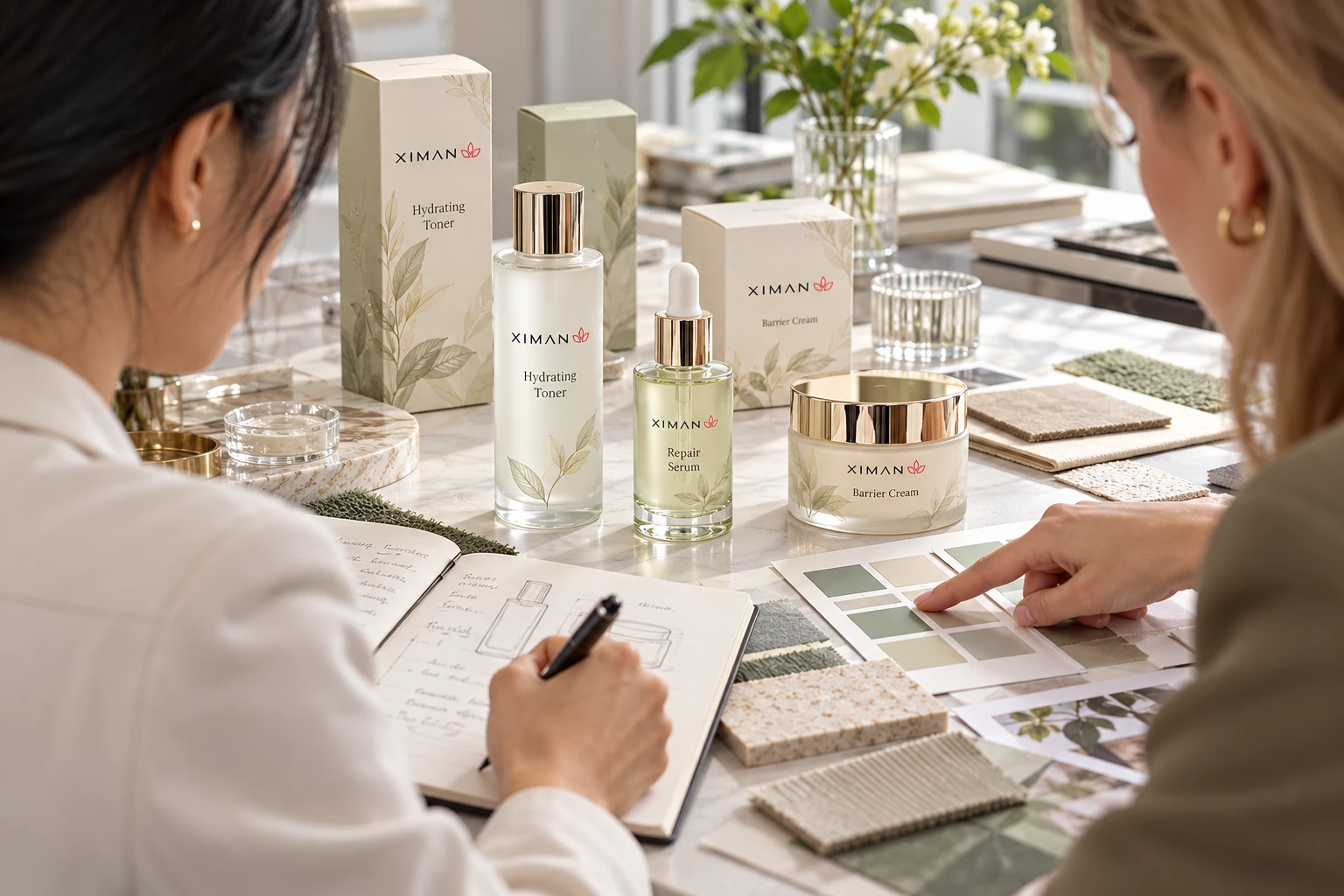
A glass jar may support a premium presentation, while an airless pump may better match a particular usage model. Each choice affects filling, transport and consumer interaction. If the product line uses different pack types, standardizing the visual identity does not eliminate the need for individual compatibility work.
MOQ depends on the bulk batch, filling setup and minimum orders for the jar, pump, decoration and carton. Quote each SKU and pack format separately. Agree component surplus ownership and approval dependencies before committing to several launches; do not assume a shared base eliminates separate packaging or assessment work.
Require a distinct consumer reason for each cream
Create a short comparison using the same dose and routine for every proposed SKU. Record the finish immediately after application, compatibility with makeup or sunscreen, and residual feel after an agreed interval. If panelists cannot distinguish the use occasion of two prototypes, the range may need fewer products or clearer formulation differences.
A shared manufacturing base can simplify procurement, but it does not erase the differences introduced by a new oil phase, fragrance or active blend. Maintain a formula and evidence record for each variant and ask the assessor which information can legitimately be shared. Launching fewer well-defined creams can also reduce packaging inventory and the number of approvals competing for attention. The range decision should follow actual differentiation, demand and operational readiness rather than a desire to fill every category on the website.
Frequently asked questions
Should a new brand launch four creams at once? Not necessarily. A tightly differentiated hero SKU and one complementary option may be easier to manage than a broad untested range.
Can two products share a safety assessment? Requirements depend on market law and product identity. Do not assume different finished products can share a complete assessment without expert review.
Is a night cream required to contain stronger actives? No. Its role can be based on a richer texture or evening routine. Stronger concentration is not a definition of night care, and any ingredient or performance claim needs appropriate support for the particular formula.
For a cream project, send XIMAN the intended routine, reference texture, jar or pump, fill size, fragrance preference, estimated units per SKU and destination market. Agree a sequence of brief review, prototype comparison, package and evidence review, written approvals and production scheduling. Use the quotation checklist to compare what is included.
Sources & review date
- European Commission safety assessment overview ↗ · Checked 2026-10-14
Sources and check dates are listed above; applicability depends on the destination market and product conditions.
Discuss your market and product
Share your destination market, product category, project stage and estimated quantity to plan the next step.